Why Ukraine Still Matters for Africa’s Future
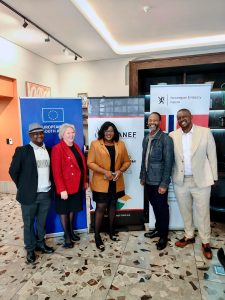
In a world increasingly crowded by crises, the quiet persistence of suffering risks being drowned out by the noise of new conflicts. This was the sobering message delivered by Norway’s Ambassador to South Africa, Anne Beathe Kristiansen, at a high-level engagement in Johannesburg convened by the South African National Editors’ Forum (SANEF) in partnership with the Royal Norwegian Embassy in Pretoria.
Speaking with urgency and candour, Kristiansen warned that the escalating confrontation involving Iran, the United States and Israel is rapidly shifting global attention away from the ongoing devastation in Ukraine. “Many conflicts compete for our attention, all of them tragic,” she said, reminding delegates that even as headlines move on, the human toll does not. She pointed to Sudan, marking three years since war erupted there, now one of the world’s gravest humanitarian disasters, and to the unrelenting suffering in Gaza. “I could go on and on,” she added, her words carrying both weariness and resolve.
Yet it was Ukraine that anchored the day’s reflection. As the war entered its fifth year, the gathering grappled with a difficult question: what happens when a war fades from the world’s gaze yet remains in reality? The consequences, participants agreed, are neither distant nor abstract. Across Africa, the war has already disrupted food and energy supplies, driven inflation and deepened economic fragility. With global crises multiplying, there is a real risk that a “forgotten war” could further destabilise an already strained international system.
Kristiansen’s address cut to the heart of a deeper concern, the erosion of international law. She warned of “flagrant violations” by powerful nations, cautioning against a world where rules painstakingly built over decades are ignored. “We cannot afford that the world reverts to anarchy in international politics,” she said. “We must be clear on international law and respect for each country’s territorial integrity and sovereignty.”
Drawing from Norway’s own history, she offered a poignant illustration. A small nation sharing a 200-year border with Russia, Norway had long enjoyed cooperation with its neighbour, remarkably without ever having gone to war. Yet Russia’s invasion of Ukraine, she said, triggered a political earthquake at home, forcing a dramatic shift in defence priorities. “When Russia does not respect Ukraine’s sovereignty, how can we be certain it will respect ours?” she asked.
The war’s ripple effects, she stressed, are global. Beyond rising food and fertiliser costs, resources once earmarked for development, particularly in Africa, are being redirected toward war efforts. This diversion, combined with mounting instability, threatens to stall progress toward critical development goals.
Central to the day’s dialogue was the role of the media. Kristiansen underscored the responsibility of a free press in shaping understanding, particularly in an era marked by disinformation and competing narratives. While Norway continues to rank among the world’s leaders in press freedom, she noted starkly different conditions in Russia, where journalists face suppression and intimidation. South Africa, she said, holds a vital position: to report with independence, grounded not in external agendas but in African realities and interests. “Language shapes perception,” she reminded the room, urging journalists to engage critically and courageously.
Ukraine’s Ambassador to South Africa, Olexander Scherba, reinforced the human dimension of the war, revealing that more than eight million people have been displaced beyond Ukraine’s borders. He described a country scarred by destruction and trauma, its suffering often under-reported and insufficiently understood by the international community.
Adding analytical depth, Dr Philani Mthembu of the Institute for Global Dialogue highlighted how the war erupted at a pivotal moment, just as developing nations sought to recover from the COVID-19 pandemic. Instead of renewed focus on development, he noted, global priorities shifted toward military expenditure. The result has been widespread economic disruption, with severe implications for food security across Africa.
Ambassador Sandra Kramer of the European Union Delegation reaffirmed the EU’s unwavering support for Ukraine, emphasising that the defence of sovereignty and international law remains non-negotiable.
As the colloquium unfolded, it became clear that this was more than a discussion about distant war. It was a call to vigilance. A reminder that in a fragmented world, attention is power, and its absence, a quiet enabler of prolonged suffering.
ENDS