Guests attending the breakfast roundtable discussion on “The combating of harassment and abuse of journalists: Seeking new rules of engagement on September 28, 2019
A draft document has been released by the International Convention On The Safety And Independence of Journalists And Other Media Professionals.
The purpose of the Convention is to promote, protect and ensure the safety of journalists and other media professionals in times of peace and during armed conflict, and to safeguard their ability to exercise their profession freely and independently in an enabling environment, without facing harassment, intimidation or attacks against their physical integrity.
The South African National Editors’ Forum (SANEF) has noted the findings of an independent inquiry into allegations of censorship and editorial interference at Primedia.
The Inquiry chaired by Terry Motau SC found the talk show host, Karima Brown had breached the provisions of the Broadcasting Complaints Commission of South Africa (BCCSA) Code.
Brown lodged her complaint against 702 station manager Thabisile Mbete, two days before her contract as host of the “Karima Brown Show” lapsed.
SANEF welcomes the fact that the Inquiry was instituted. We believe that editorial independence is sacrosanct. We believe that newsrooms must be insulated from outside interference including pressures from both political and commercial interests. All allegations of interference need to be comprehensively investigated and adjudicated on.
We welcome the fact that the Inquiry makes several suggestions regarding possible amendments and/or improvements to Primedia’s editorial policies and procedures. We hope that these recommendations are seriously considered.
For more information please contact:
Sam Mkokeli – SANEF Media Freedom Chairperson, 082 084 2051
Kate Skinner – SANEF Executive Director 082 926 6404
The South African National Editors’ Forum (SANEF) has noted the testimony of Colonel Kobus Roelofse at the Commission of Inquiry into State Capture on 18 September 2019, implicating Tiso Blackstar senior journalist Ranjeni Munusamy in accepting gratification from the Crime Intelligence unit.
Roelofse testified that he uncovered a payment of R143 621.78 from a secret slush fund of the police’s Crime Intelligence unit towards Munusamy’s vehicle finance account in July 2008. At the time, Munusamy worked as a communications consultant for clients, including the Friends of Jacob Zuma trust.
SANEF has noted Munusamy’s denial of the allegation and welcomes her decision to cooperate with the Zondo Commission.
SANEF champions ethical journalism and has launched its own Inquiry into Media Credibility and Ethics, chaired by retired judge Kathleen Satchwell. We encourage any South African with evidence of journalists acting unethically or illegally to approach Judge Satchwell and the authorities, including the Zondo Commission.
Helene Eloff’s Master’s Degree Research titled: “South Africa’s Media Defamation Law in a Constitutional, Digital Age” deals with the digitisation of journalism and our legal responses.
She has dedicated this research to those South African journalists who fulfil their mandate legally and ethically. She hopes that the contents of her research will contribute towards the research pool in both journalism and law.
Her dissertation finds that South Africa’s media law is unfair in that it differentiates between media defendants and non-media defendants. “The effects of doing so cannot be justified in terms of Section 36 of the Constitution,” she argues.
SANEF Chair Mahlatse Mahlase greets EFF leaders Julius Malema and Mbuyiseni Ndlozi at the Equality Court
The South African National Editors Forum (SANEF) held its September council in Pretoria on Saturday and discussed several issues, including the Economic Freedom Fighters’ EFF’s “banning” of amaBhungane, Scorpio and Daily Maverick from attending their party events, including press conferences.
Despite being told by Julius Malema on Social Media to “go to hell” at the weekend while our Council meeting was taking place, the SANEF Council still confirmed and reiterated the importance of trying to continue to engage with the EFF despite many failed attempts.
We believe it is critical to keep communication channels open and we will formally request a meeting.
SANEF confirmed its solidarity with the banned journalists and their commitment to holding the EFF to account.
SANEF, again, notes that the ban came after Scorpio published several exposés on Malema, party deputy president Floyd Shivambu, Shivambu’s brother Brian, as well as a cousin of Malema’s. Scorpio has alleged that an R16.1m transfer has been made from VBS to Brian Shivambu’s company Sgameka Projects – effectively a shell company. Scorpio has further alleged that at least R5.3m of the R16.1m flowed to Mahuna Investments. Scorpio reported that Mr Malema used Mahuna Investments’ business account as his “personal slush fund”.
Again, SANEF wishes to challenge Mr Malema and other implicated EFF leaders to disprove these reports and /or to use the appropriate channels such as the Ombud’s Office and the Press Council if they feel aggrieved at any aspect of the reporting.
SANEF wants to place on record that it is unacceptable for the EFF to respond to these allegations by attempting to ban journalists from press conferences. In the past, we have been opposed to other bans such as the EFF’s on ANN7 and the New Age.
Political parties should not be picking and choosing who covers their events – to ensure they get an easy ride. The duty of journalists is to hold the powerful to account and to act in the public interest.
It should be noted that SANEF and five journalists are seeking relief against the EFF and Malema in the Equality Court following a spate of abuse and harassment by people purporting to be EFF supporters against journalists who had been specifically named by Malema. At the heart of our case is the singling out of targeted individual journalists by Malema and the EFF leadership and the creation of an enabling environment for abuse and harassment to be levelled against them. SANEF and the journalists approached the Equality Court on legal advice as we believe that the conduct of the EFF and their supporters constitute hate speech and harassment against the named journalists. Judgement was reserved.
SANEF’s Council confirmed a roundtable on the harassment of Journalists scheduled to take place on 28 September 2019 in Johannesburg. All political parties including the EFF will be invited and we trust they will attend.
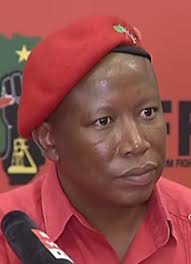
The South African National Editors Forum (SANEF) is appalled by Economic Freedom Front (EFF) leader Julius Malema’s call for the “banning” of investigative journalism units, amaBhungane and the Daily Maverick’s investigative unit, Scorpio, from attending their party events, including press conferences on 13 September 2019.
SANEF believes these actions mimic the apartheid state’s censorious responses to investigative reports that exposed its brutal and corrupt activities.
Mr Malema called for this banning on Thursday during the EFF’s memorial service for former Zimbabwean president, Robert Mugabe. Speaking to party supporters, Mr Malema said the publications, “should be treated as the enemy, much like the EFF did when it banned Gupta-owned, The New Age newspaper and broadcaster, ANN7”.
He stated, “We declare them as an enemy of the revolution, they should never participate in our events, we should never answer any question from amaBhungane, Daily Maverick or Scorpio. Let them write any nonsense they want to write about us. We know [the person] who writes their questions is Pravin.”
The “ban” comes after Scorpio published an exposé on Malema, party deputy president Floyd Shivambu, Shivambu’s brother Brian, as well as a cousin of Malema’s, making allegations that they are involved in the illicit flow of funds from the plundered VBS.
Mapping out the VBS money trail, Scorpio has alleged that an R16.1m transfer has been made from VBS to Brian Shivambu’s company Sgameka Projects – effectively a shell company. Scorpio has further alleged that at least R5.3m of the R16.1m flowed to Mahuna Investments. Scorpio reported that Mr Malema used Mahuna Investments’ business account as his “personal slush fund”.
SANEF wishes to challenge Mr Malema and other implicated EFF leaders to disprove these reports and /or to use the appropriate channels such as the Ombud’s Office and the Press Council if they feel aggrieved at any aspect of the reporting.
SANEF believes it is unacceptable that the leader of the third-largest political party would engage in unconstitutional actions – actions that deny journalists the opportunity to work effectively by being refused the right to attend EFF’s meetings, press conferences and other activities. In doing so, Mr Malema fundamentally undermines the right to “freedom of the press and other media” which is guaranteed in section 16(1)(a) of the Constitution. Worse, he undermines the right of ordinary people, the voting public, “to receive information and ideas” – another right that is expressly provided for in section 16(1)(b) of the Constitution – as the press is the most significant channel through which people access political/current affairs information and ideas.
Mr Malema is titled an “Honourable Member of Parliament” and as an MP he has undertaken, as part of his oath of office, to uphold the Constitution. His calling for this ban of the country’s leading (and award-winning) investigative journalism units is at odds with the oath he took and with accepted standards of conduct for members of parliament.
In the wake of these attacks, we hope that members of parliament will condemn, in the strongest terms, the EFF Leader’s attempts to drag South Africa back to the days of apartheid censorship where media intimidation by apartheid leaders was routine. Mr Malema needs to be held to his oath to uphold the Constitution.
SANEF is currently involved in a court case against the EFF – focusing on stopping the intimidation and harassment of journalists. The matter was heard in August in the Equality Court. Judgement is reserved.
For more information please contact:
Sam Mkokeli – SANEF Media Freedom Chairperson, 082 084 2051
Kate Skinner – SANEF Executive Director 082 926 6404
The South African National Editors Forum (SANEF) wishes to strongly condemn on 11 September 2019 the escalating harassment and abuse of journalists in the country.
SANEF has learnt with sadness of an incident on Tuesday where Journalists Alex Mitchley of News24, Hanti Otto of Netwerk24 and Pule Letshwiti from etv were approached and threatened by a state witness in the Nicholas Ninow case.
Ninow is the man who pleaded guilty on Tuesday to raping a seven-year-old at a Dros restaurant last year. He pleaded guilty to rape, possession of drugs and defeating the ends of justice — but pleaded not guilty to assault.
According to Mitchley, the witness approached the journalists very angrily outside the Gauteng High Court in Pretoria on Tuesday during a tea break, asking why media houses named him. It was explained that there was no court order not to name the witness as he testified in an open court. He then looked at the journalists and said, in Afrikaans, that he was going to slit their throats even making a throat-slitting gesture with his thumb while smiling and laughing.
“I told him to leave us alone and would inform the court of his threats. He tried following to apologize but I told him to get away from me as he had just threatened our lives,” Mitchley said.
The witness came to court to confront journalists as he finished testifying on Monday.
The harassment of journalists, not just by authorities and politicians, but lately general members of the public in protest areas, is a phenomenon that has prompted growing concerns for SANEF in recent months.
SANEF notes that while retaliation for the content of professional output is common to all journalists, female journalists face an additional burden in that they are also attacked purely based on their gender.
SANEF wishes to caution against impunity for threats of any nature and crimes against the media because it fuels and perpetuates the cycle of violence and the resulting self-censorship deprives society of information and further affects press freedom. It also directly impacts the United Nations’ human rights-based efforts to promote peace, security, and sustainable development.
On Economic Freedom Front (EFF) leader Julius Malema
SANEF also notes the raging debate on the matter of 702 journalists, Barry Bateman, and his uttering of an unsavoury word in public allegedly aimed at EFF leader Julius Malema. SANEF notes the concerns raised by the supporters of the Economic Freedom Fighters (EFF). We also note that employer Prime Media has apologised and has launched an investigation into the matter.
SANEF does not condone the unprofessional behaviour on the part of any journalist. However, we believe this should not be used as an excuse to trigger an all-out attack on the media and journalists as a collective. Rather than a verdict being debated on social media, we ask that this matter be dealt with via the media house concerned.
For more information please contact:
Sam Mkokeli – SANEF Media Freedom Chairperson, 082 084 2051
Mary Papayya – SANEF Media Freedom 082 379 4957
Kate Skinner – SANEF Executive Director 082 926 6404
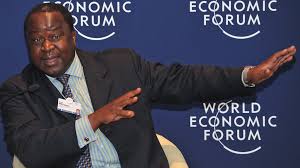
Tito Mboweni at the World Economic Forum: Photo Eric Miller
Finance Minister Tito Mboweni’s refusal to answer questions
On 3 September 2019, the South African National Editors’ Forum (SANEF) condemns Minister Mboweni’s refusal to answer questions from Business Maverick’s journalist, Ray Mahlaka, including his pulling of the “you should respect your elders” card.
Minister Mboweni was addressing a press conference on his strategic economic plan “Economic transformation, Inclusive Growth, and Competitiveness: Towards an Economic Strategy for South Africa” published on 27 August, ahead of the World Economic Forum in Africa. Instead of asking a question about the plan Mboweni responded with the statement, “this isn’t the time and place”. Further, he stated that journalists should respect their elders.
SANEF believes that this inappropriate response from the finance minister. This is a critical document and it is journalists’ role to ask questions, to critique and to analyse. It is impossible for journalists to hold politicians – or anyone in a position of power – to account if they are not given the space for robust engagement. SANEF does not believe that this is an issue of respect. Robust engagement is the lifeblood of the media and it is ultimately the lifeblood of our young democracy.
SANEF Also Condemns Attacks On Sabc & Caxton Journalists
SANEF also condemns attacks on SABC journalist, Sashin Naidoo and Caxton community media journalist, Tshepiso Mametela.
Naidoo was covering the violent looting in Jeppestown and Malvern yesterday from early in the morning. He managed to escape from looters without being personally harmed but his car was severely damaged by looters. Naidoo was on his way to a briefing with Minister of Safety and Security, Bheki Cele.
Mametela, from community newspaper the “Joburg East Express”, had his camera bag and equipment stolen while making his way back to his car after engaging with the Minister. He encountered a dispersing mob and attempted to run for cover and tripped, which was when the equipment was stolen. He also noticed damage to his vehicle – he believes that this was caused by a vehicle that bumped into his car while fleeing the area.
SANEF is relieved that both Mametela and Naidoo weren’t harmed but we are concerned that journalists are more frequently being attacked – and more frequently being caught in the cross-fire of violent attacks.
SANEF believes that it is essential that violent protests and looting are covered – and covered in-depth – so that citizens understand the reasons behind the looting, the triggers and ultimately how to stop this in the future. However, simultaneously, media companies need to make sure that journalists are protected. Journalists need to be given the tools, strategies and necessary training. Further, journalists need to be given trauma counselling. As SANEF we are committed to supporting media companies to provide training and support to ensure the safety of journalists.
Also, SANEF believes that it is essential that members of the public are educated to understand the role of the media in covering stories – including the role of the media in covering protests, incidents of violence, looting and so forth. Journalists need to be protected by citizens so that they can move freely – and so they can ask the hard questions, talk truth to power and ultimately get to the bottom of why these violent incidents are happening, including ways to stop the violence and remedies to the deep underlying causes.
The South African National Editors’ Forum (SANEF) mourns on 27 August 2019 the passing of veteran journalist, Ben Said who drowned on Monday at a beach in Mozambique, where he was holidaying with his wife and two daughters. According to eNCA, he drowned in a tragic diving accident on Monday afternoon.
Said was eNCA’s director of news and had just recently returned to South Africa after working at television channel – TRT World in Turkey. He joined eNCA as a producer in 2000 before rising through the ranks to become senior reporter and eventually Group News Editor. He left the news station in 2015 to take up a senior management position at TRT in Turkey. He had just re-joined the senior management team at eNCA.
eNCA’s Editor-at-Large, Jeremy Maggs has described Said as “one of the country’s best television journalists” saying his loss to the station was immense.
“Having just re-joined the station, he was already making his presence felt across all aspects of the business. We are all in deep shock,” said Maggs.
SANEF is deeply saddened by this loss to the media industry and we send our deepest condolences to his wife Nicky and his daughters Lily and Bella as well as his family, friends and colleagues across the media industry.
May his soul rest in peace.
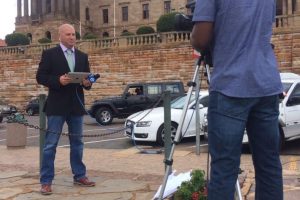
Ben Said working at the Union Buildings in Pretoria
This website uses cookies to improve your experience while you navigate through the website. Out of these cookies, the cookies that are categorised as necessary are stored on your browser as they are essential for the basic functionalities of the website. We also use third-party cookies that help us analyse and understand how you use this website. These cookies will be stored in your browser only with your consent. You also have the option to opt-out of these cookies. Opting out of some of these cookies may have an effect on your browsing experience.
Necessary
Always active
Necessary cookies are essential for the website to function properly. This category only includes cookies that ensures basic functionalities and security features of the website. These cookies do not store any personal information.
Preferences
The technical storage or access is necessary for the legitimate purpose of storing preferences that are not requested by the subscriber or user.
Analytics
Analytics cookies are used to track user behaviour on our website. We process these cookies to understand user engagement and improve user experience on our website.The technical storage or access that is used exclusively for anonymous statistical purposes. Without a subpoena, voluntary compliance on the part of your Internet Service Provider, or additional records from a third party, information stored or retrieved for this purpose alone cannot usually be used to identify you.
Marketing
The technical storage or access is required to create user profiles to send advertising, or to track the user on a website or across several websites for similar marketing purposes.