On 13 December 2019, the South African National Editors’ Forum (SANEF) calls for the Economic Freedom Fighters (EFF) to include a diversity of journalists at its elective conference opening today. SANEF has learnt that the EFF has denied access to journalists from Daily Maverick, Scorpio, amaBhungane, Rapport and Caxton publications, among several media outlets.
We believe this decision is unconstitutional.
SANEF understands that journalists from these publications applied in time. In terms of amaBhungane and the Daily Maverick instead of accreditation, they received emails that included two previous press statements issued by the party.
– “EFF is not moved by SANEF and its double standards on so-called investigative journalists” and “EFF notes testimony at the Zondo Commission against a journalist paid by State Security”.
The first statement is particularly instructive as it argues that the EFF has the right to freedom of association. It states, “… we have the right to decide who we associate with, in our events and platforms,” i.e. that the EFF has the right to exclude specific media organisations from their events.
We believe that this move infringes on the right of freedom of expression enshrined in Section 16 of our Constitution. Section 16 states that everyone has the right to freedom of expression, which includes “freedom of the press and other media” and “freedom to receive or impart information or ideas”
The Bill of Rights covers government and public bodies but is also importantly extended to private institutions and parties as mandated by section 8(2).
SANEF believes:
* The EFF’s ban of certain publications is in effect diminishing citizens right to receive information to make informed decisions about politics – including their view of the EFF.
* That the ban was imposed by the EFF to punish specific media organisations for reporting on their alleged corruption and theft i.e. journalists are being excluded for doing their job.
* The EFFs actions signal a warning to other media houses not to report critically and without fear or favour on wrongdoing.
* This ban is thus an act of intimidation.
We believe that while this intimidation will impact negatively on the affected media organisations, it will deprive ordinary citizens of relevant information that could assist them in making informed choices on how to vote. Therefore, the real victims of this ban are the voters and citizens.
As stated in one of our previous statements, the EFF leader Mr Julius Malema is titled an “Honourable Member of Parliament”, and as a member of parliament (MP) he has undertaken, as part of his oath of office, to uphold the Constitution. His calling for this ban of the country’s leading (and award-winning) investigative journalism units and other publications is at odds with the oath he took and with accepted standards of conduct for MPs.
We call on the EFF to allow journalists from Daily Maverick, Scorpio, amaBhungane and Rapport to attend. If this decision to exclude certain media organisations is not reversed, we call on MPs to sanction Mr Malema.
Finally, SANEF is not convinced by the EFF’s argument that the reason it excluded some journalists is due to lack of space at NASREC.
We know that some media houses received several accreditations.
We call on the EFF to provide access to a diversity of journalists, from a range of media outlets, at this critical event.
Note for Editors: The South African National Editors’ Forum (SANEF) is a non-profit organisation whose members are editors, senior journalists and journalism trainers from all areas of the South African media. We are committed to championing South Africa’s hard-won freedom of expression and promoting quality, ethics and diversity in the South African media. We promote excellence in journalism through fighting for media freedom, writing policy submissions, research, education and training programmes.
For more information please contact:
• Katy Katopodis – Acting SANEF Chairperson, (082) 805-7022
• Moipone Malefane – SANEF Secretary General (082) 772-5861
• Mary Papayya – Acting SANEF Media Freedom Chair (082) 379-4957
• Sbu Ngalwa – SANEF Eastern Cape Convenor (073) 404-1415
• Kate Skinner – SANEF Executive Director (082 926 6404)
The explosion of the multimedia sector is attracting restrictive media laws that have been the bane of print media for many years, warned Jovial Rantao, chairperson of The African Editors Forum.
You can access Jovial Rantao’s speech here
He told members of the forum at the opening of the Freedom of Expression Festival held between 3rd and 4th December 2019 in Maseru Lesotho that due to the new technology developments, some countries have become the enemies of the people and the media. They include countries that were at the forefront of the liberation in this continent.
While the advent of new media and the much-talked-about fourth industrial revolution has brought about significant and exciting changes on the African continent, it has also changed the way the media is consumed and produced.
Rantao said: “Journalists are still being arrested for writing stories that the government do not like. Bloggers and others who use powerful social media face the same fate. Newspapers are often ordered to stop operations if, again, the powers that do not like its content.”
“The story of an African journalist being detained, tortured and held for months, some running into years, is common in Uganda, Sudan, Zambia, Cameroon, Egypt and even in Tanzania.”
“I am saying ‘even’ in Tanzania because when President John Magufuli arrived, everyone thought that he belonged to a new breed of African leaders. The breed that has embraced democracy, good governance with media freedom and independence at the core. However, the repression of the media in Tanzania has shown us otherwise,” he added.
He said that The Africa Editors Forum (TAEF) is as concerned about the conduct of the government of Kenya against the media, as it still is about the situation in Sudan and Burundi. The two countries have proved to be the most dangerous places to be a journalist, he said.
“The problem here is a plethora of laws that are inimical to media freedom. These laws were identified by the world publishers and editors who gathered in Cape Town in 2003 and adopted the Table Mountain Declaration. The declaration, in the main, called for the scrapping of, amongst others, insult laws from statuette books across the continent,” Rantao said.
Also addressing the meeting, Lydia Gachungi, Regional Adviser on Freedom of Expression and Safety of Journalists to UNESCO Liaison Office to AU in Ethiopia, said the governments in this continent as well as ordinary citizens in individual countries needed to be concerned about the attacks on journalists in public and social media platforms.
She said that the promotion of the safety of journalists and combatting impunity for those who attack them were central elements within UNESCO’s support for press freedom on all media platforms. Part of the reason why the UN was so concerned was that 1010 journalists were killed globally in the last 12 years.
“Impunity for these crimes remains a key challenge. Out of the 1010 killings recorded by UNESCO in the last 12 years, only 115 were followed by a judicial procedure that led to the conviction of one or multiple perpetrators. A rise in the percentage of women journalists among those killed in 2017 (14%) marks the continuation of a trend that has become apparent over the last years.”
“Impunity for crimes against the media fuels and perpetuates the cycle of violence, and the resulting self-censorship deprives society of information and further affects press freedom,” she said.
She said digitally mediated attacks were not only on digital infrastructure or Internet connectivity, but they include online-mediated harassment which sought to cause psychological harm. Put together with physical violence and the killings, furthermore these horrid actions were meant to intimidate all journalists in a country, Gachungi said.
The South African National Editors’ Forum (SANEF) has learnt that both the national and provincial spheres of government have discriminated against several community media journalists in Limpopo on Tuesday 26 November 2019. The journalists were invited on a trip to cover the launch of 16 days of activism, including a visit to the Medupi Power Station and the launch of a new District Development Model in Waterberg aimed at ensuring integrated planning, budgeting and development by all three spheres of government.
Reports to SANEF indicate that community media journalists were left off the bus which was transporting all media. Only a selected group of journalists were invited. The community media were also excluded from a media networking session.
SANEF finds these exclusions worrying, as it has been the norm for government to support community media by way of transport to key events.
Community media lack the resources – financial and otherwise – to get to far-flung areas and other destinations and for government to arbitrarily pull the plug on such support is unfair. This affects the free flow of information particularly to rural communities which are dependent on the community media sector.
SANEF reiterates that all journalists should be invited and be welcome at all public events and that special provisions should be made for community media.
Finally, we note with concern that the exclusion of the community media sector by government reinforces the recent decision by the Economic Freedom Fighters (EFF) to ban the Daily Maverick and the investigative units, Scorpio and amaBhungane from their media events. SANEF calls for transparency and accountability to be prioritised by all state entities including political parties in the National Assembly, the Provincial Legislatures and Local Government.
The South African National Editors Forum (SANEF) welcomes today’s’ SABC Board statement in response to a story in the Sunday Times of 24th November 2019 titled: “SABC asks spooks to spy on staff” stating that it will not place journalists under surveillance. The SABC has stated that it does engage the State Security Agency (SSA) on several matters – such as the leaking of board minutes – but it has taken a clear decision never to place journalists under surveillance. We welcome this decision.
While the SABC board has a right to protect the image and the interests of the public broadcaster, they equally have a responsibility to safeguard the SABC from political interference. It is for this reason that we are uncomfortable with the involvement of the SSA as it has been politicised in recent times and used as a weapon in factional political battles.
The memory of the intimidation of SABC editors is still fresh on our minds as the state intelligence “swept” their offices recently in the name of protecting the SABC as “a national key point”. While the SABC board’s statement is reassuring by saying that journalists will not be under surveillance, SANEF finds it challenging to accept that the SSA will, at all times, act within those parameters.
As SANEF, we are well aware of the chilling effect of security agents probing journalists working at a public broadcaster. There is too much scope for abuse. The threats to freedom of expression are apparent. We know that both Houses of Parliament have passed the Critical Infrastructure Bill. The bill replaces the National Key Points Act. The SABC is a national key point and will now be a critical infrastructure. The bill was sent to the President for signing at which point it will become an Act.
Previously, SANEF made submissions on the bill arguing the unconstitutionality of provisions applied to journalists employed by an institution that is a national key point. We called for specific exceptions for editorial staff of the SABC from the provisions of the Critical Infrastructure Bill. Sadly, these were simply ignored by both Houses of Parliament. We will be writing to the President requesting him to consider SANEF’s submissions on the unconstitutionality of the bill and to refer it back to the National Assembly to reconsider these constitutional concerns.
We trust this will not be necessary and urge the President to send the bill back to Parliament to address the existing constitutionality problems with it. We officially give notice to the SABC Board, the President, Parliament and all South Africans that we act to protect the public broadcaster, including through launching legal proceedings to challenge the constitutionality of the bill if necessary.
Finally, we want to state that Mary Papayya, who is SANEF Acting Media Freedom Committee chairperson, is committed to media freedom. Her actions speak for itself as our acting media freedom chairperson. We also place it on record that she recused herself from all discussions on all SABC concerned matters at our council meeting on Saturday 23rd November 2019 – and has previously done so in all SABC matters generally.
SANEF has a conflict of interest policy to be henceforth included as a specific clause in our SANEF constitution. It states that our Council members and sub-committee chairpersons may never comment on any deliberations and decisions taken on the media house where they are employed
For The Record: The South African National Editors’ Forum (SANEF) is a non-profit organisation whose members are editors, senior journalists and journalism trainers from all areas of the South African media. We are committed to championing South Africa’s hard-won freedom of expression and promoting quality, ethics and diversity in the South African media. SANEF promotes excellence in journalism through fighting for media freedom, writing policy submissions, research, education and training programmes.
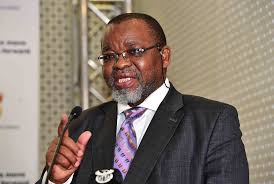
The South African National Editors’ Forum (SANEF) met today, 31 October, with Minister of Mineral Resources and Energy, Mr. Gwede Mantashe, to discuss his comments that he bribed journalists at the Sunday World newspaper.
Members of the SANEF Management Committee and the editor of the Sunday World, Makhudu Sefara, a SANEF member, were in attendance. Mantashe was accompanied by his special advisors, chief of staff & media liaison officer.
The meeting was robust and difficult as the events of the past 5 days were discussed.
As SANEF we reiterated the damage the allegations have done to not only the Sunday World but to the whole industry. “Paid for” or so-called “brown envelope” is gutter journalism, and an assault to media ethics.
The new editor-in-chief of the Sunday World, Makhudu Sefara explained that the allegations have created a reputational crisis for the weekly paper.
The Minister’s initial statement that he bribed journalists and then his withdrawal of this claim has threatened the invaluable trust relationship necessary between the publication and readers – but also amongst the Sunday World and its journalists. Sefara has been forced to subject all his staff to lie-detector tests.
After the robust discussion, Minister Mantashe confirmed the following:
– That he had stated that he had bribed journalists – confirming that the statements attributed to him in the Sunday World were correct.
– He, however, denied bribing journalists. He insists there was never a meeting with the paper’s journalists and an exchange of money.
– He, however, said that he will subject himself to the full processes of the
Kathy Satchwell Inquiry into Media Ethics and Credibility to explain the circumstances that led to him making the statement.
SANEF chairperson, Mahlatse Mahlase requested that the Minister apologise to the nation, journalists at Sunday World, and the industry for the damage, pain and confusion he has caused by making the serious allegations that he had bribed journalists.
“Our reporters feel he must apologise not just to the paper, but for causing pain and trauma in their lives, Sefara said.
SANEF urges the Minister that when he approaches the Satchwell commission he makes a statement under oath.
SANEF will await the outcomes of the Satchwell ethics and credibility inquiry on the matter.
We continue to encourage members of the public to make submissions to the inquiry to help in the process of holding journalists accountable. Please send submissions to [email protected].
Finally, we have called on the President to look into this issue as we believe strongly that sitting cabinet members have a role to play in eradicating corruption and promoting media freedom.
Mary Papayya – SANEF Media Freedom, Acting Chair – 082 379 4957
Kate Skinner – SANEF Executive Director – 082 926 6404
Mr. Gwede Mantashe Minister of Mineral Resources and Energy
Trust in the Media is Important to our Democracy
The Minister of Mineral Resources and Energy, Mr Gwede Mantashe today, 31 October 2019, met with the South African National Editors Forum (SANEF) – at which meeting also the editor of the Sunday World was present.
The Minister acknowledges that, during the telephonic conversation with the Sunday World, he made claims about the bribery of journalists. He regrets these statements as there is no basis for them. He neither met with nor paid any journalists. He retracts what he said.
The Minister further commits to fully participate in SANEF’s inquiry into media ethics and credibility led by retired Judge Satchwell. This is to ensure transparency, fair and appropriate scrutiny, and to assist in engendering trust in newsrooms; and between the media and society at large.
He is committed to an environment in which journalists can work freely and without suspicion. The integrity of the media is integral to a healthy, progressive and open democratic society.
The South African National Editors’ Forum (SANEF) is shocked to hear on 27th October 2019 of the Minister of Mineral and Energy Affairs, Gwede Mantashe’s brazen alleged admission that he paid two Sunday World journalists to “bury” a story about his relationship with a student, Lerato Habiba Makgatho.
According to the Sunday World, Mantashe paid the journalists R70 000 to “destroy evidence” backing the story. Mantashe has not revealed the names of the journalists.
SANEF believes that “paid for” or what is known as “brown envelope” journalism is completely counter to journalism ethics. Section 2 of the Press Council Code deals with “Independence and Conflicts of Interest”.
The Code states clearly that:
The media shall:
2.1 not allow commercial, political, personal or other non-professional considerations to influence reporting, and avoid conflicts of interest as well as practices that could lead readers to doubt the media’s independence and professionalism;
2.2 not accept any benefit which may influence coverage;
2.3 indicate clearly when an outside organization has contributed to the cost of newsgathering; and
2.4 keep editorial material clearly distinct from advertising and sponsored events.
SANEF will be pursuing the following actions:
– Writing to the Minister to request that he reveals the names of the journalists involved;
– Supporting Sunday World’s investigations into the matter including their commitment to fire journalists if there is concrete evidence of them taking a bribe and ensuring that all their journalists sign pledges to ensure ethical journalism; and
– Adding a specific clause to our “Draft rules of engagement” with political parties to call for politicians to support an outright ban on any form of “brown envelope” journalism.
SANEF champions ethical journalism. We believe that if anyone has any evidence of unethical journalism – including the very serious breach of accepting funds for journalism – they should go to the Press Council.
Further, we want to remind the public that we have launched our own independent Inquiry into Media Credibility and Ethics, chaired by retired Judge Kathleen Satchwell. We encourage any South African with evidence of journalists acting unethically or illegally to approach Judge Satchwell and the authorities. Please send submissions to – [email protected].
In commemoration of Black Wednesday and in celebration of the hard-won media freedom that followed, the South African National Editors’ Forum (SANEF) will host a gala dinner in honour of those who fought for the freedom of the press, and those who continue to do so.
The 3rd Annual SANEF Black Wednesday Gala Dinner will be held at the historic Emoyeni venue in Parktown, Johannesburg, on Friday, October 18, at 18:30.
The keynote address will be delivered by Deputy Governor of the Reserve Bank Kuben Naidoo, who also serves as the head of the newly established Prudential Authority.
The gala dinner is an opportunity to remember October 19, 1977 – a dark day in the country’s history when the apartheid regime extended its repression and unleashed unprecedented brutality on journalists and the media industry.
The dinner also honours those who fought for the media freedoms we enjoy today, despite the personal and professional risks they faced. On that Wednesday in 1977, in a bid to gag the media, then-Minister of Justice Jimmy Kruger banned several newspapers, as well as various black consciousness and pro-democracy organisations. Prominent editors and journalists were arrested, detained, assaulted, tortured. Many who were released were slapped with five-year banning orders and placed under house arrest.
This crackdown on media freedom and freedom of speech triggered years of resistance that rippled through South Africa and Africa, laying the groundwork for the current fight for media freedom and freedom of expression.
“We extend the commemoration to all journalists and editors that were harassed throughout the apartheid era,” says SANEF Chairperson Mahlatse Mahlase.
“SANEF has been holding an annual Black Wednesday Gala Dinner since 2016, which has now become one of the most popular and important events on our calendar.”
Over the years, SANEF has championed media freedom and fought to ensure that journalists are safe and protected in the course of speaking truth to power. The fight has evolved and expanded to include organisational diversity and insist upon the highest standards of media ethics and journalistic quality.
“We hold a dinner to remember that day – and the apartheid period – and to celebrate how far we have come,” Mahlase explains. “It is an occasion to look at the current media freedom environment and on further attempts to encroach on the media’s constitutional right to report without fear or favour.”
“The media also faces new challenges including rebuilding trust with the public at a time where allegations of bribery are surfacing and casting a dark cloud on the integrity and credibility of the journalism craft.”
“As part of ensuring that we are held accountable, SANEF has instituted an inquiry led by a retired Judge Kathleen Satchwell to contribute towards building on high ethical standards because a sure sign of professionalism and responsible journalism is the ability to hold ourselves accountable.” She explains.
The dinner, she says, is also an opportunity to network and to raise funds for SANEF’s Media Freedom Defence Fund. The fund was established to fund legal challenges that arise in defence of media freedom and to assist in covering the legal costs against journalists and media organisations embroiled in these battles.
This fund has been used for several important, high-profile legal cases, including the legal battle against populist grouping Black First, Land First after its members openly threatened, harassed and attacked several journalists and editors in 2017.
Another recent example of the Defence Fund in action is SANEF’s ongoing case against the Economic Freedom Fighters (EFF) and its leader, Julius Malema, in the Equality Court. The matter, which deals with chilling, misogynist online abuse and harassment perpetrated by party members and leaders and aimed at members of the media who had been named by Malema.
The matter was heard in August this year and judgement was reserved. Legal cases and policy work have collectively cost SANEF more than R2m since 2017.
According to Mahlase, the work done is significant, not only for media practitioners but for the country. “The fund supports a significant amount of policy and legislative work. This is pursued to maintain and strengthen our media freedom landscape in the interests of deepening our democracy,” Mahlase explains.
• Members of the public and interested parties wanting to make presentations at the Inquiry should contact the panel via the email address: [email protected]
For more information and interviews contact:
Mahlatse Mahlase – SANEF Chairperson 083 399-2852
Judy Sandison – SANEF Media Freedom Committee 082 571-3334
Sbu Ngalwa – SANEF Media Freedom 073 404 1415
Janet Heard – SANEF Western Cape SANEF Convenor 078041 9528
Indian investigative journalist Rana Ayyub’s book has not been published in her country, and yet it has sold over 700,000 copies.
By Glenda Daniels – the article was first published in the Daily Maverick.
Indian investigative journalist Rana Ayyub’s book has not been published in her country yet has sold over 700,000 copies.
This is a testament to how much people want to hear the truth and why independent journalism will always remain relevant. At the weekend, she spoke at an event in Johannesburg on combating online harassment of journalists. It was a pity few politicians pitched.
It would have been beneficial to all had the ANC and the EFF made the effort to attend a roundtable the South African National Editors Forum (SANEF) held on Saturday 28 September – World News Day marked by the World Editors Forum.
The date coincided with Unesco’s International Day for Access to Information and celebrated “the work of professional news organisations and the impact they make on the communities they serve”.
In Johannesburg on Saturday, the online harassment of journalists and a memorandum of understanding (MOU) on new rules of engagement regarding treatment, safety and protection of journalists were on the table, due to be signed. But this did not happen.
Political parties would have listened to the keynote address of famous Indian investigative journalist Rana Ayyub, who has gone through indescribable suffering.
But only two parties turned up (out of 14 represented in Parliament) – the DA, represented by Refiloe Nt’sekhe and Cope, represented by Dennis Bloem.
A number of journalists and civil society organisations, including the Special Freedom Rapporteur for Freedom of Expression and Access to Information in Africa, Media Monitoring Africa, the Press Council of SA and the Freedom of Expression Institute, made valuable contributions.
The ANC and EFF would have heard the chilling story of Ayyub, who wrote the best-selling book Gujarat Files: Anatomy of a Cover-Up about the 2002 riots which killed more than 1,000 Muslims, an account which her own news organisation would not publish. Ayyub went undercover for eight months as a Hindu nationalist and detailed the killings of Muslims.
She was considered a “weak child” as she had suffered polio, but chose journalism, which requires a robust constitution, because she was “seeing injustice” and “wanted to give voice to the voiceless”.
Ayyub was trolled online and photoshopped into a porn video that was circulated far and wide-reaching untold numbers of people on Facebook and Twitter, including her father’s phone.
This is some of what she said on Saturday:
“They gloated about the loss of Muslim lives. My news organisation refused to publish due to political pressure. My country has never acknowledged the book. There were fake tweets in my name. I was doxxed (meaning her telephone number was posted online). I was sent rape and death threats. Copies of my book were burnt and sent to my house. After seeing the porn video, I was nauseated and I threw up, I was humiliated. Screenshots were on my timeline and on Facebook. I began to have palpitations and I couldn’t eat.
“I suffered a breakdown after the video. I had to be hospitalised and get psychiatric help. I still suffer from anxiety.
“Twitter said the video did not violate policy. Police officers said, ‘Mam, it didn’t happen to you, it’s online.’ They were laughing. Twitter worked with the police, nothing happened, nobody acted on it. Twitter and Facebook reached out but not because they were concerned but because they had to show they were concerned. Last week our prime minister [Narendra Modi] went to the UN to speak about peace and solidarity and in India, he speaks of hate. He has just received millions from the Melinda Gates Foundation for a ‘clean India’.
“Political parties have a role to play in these rape and death threats. Our prime minister follows these Twitter handles [which are threatening me]. There has to be dialogue. We need to engage with Twitter and Facebook on this matter. We need to sensitise political parties. I feel pessimistic.”
During a break after recounting this trauma, Ayyub disclosed that it didn’t get easier talking about it. But she will have to talk about it at book events planned for her visit to South Africa over the next few days.
Talking at this event brought back all the trauma and emotional violence she had suffered and she had to walk outside to get some air.
Ayyub pointed out that her situation was not isolated. For example, Maria Ressa of the Philippines was threatened with rape and murder, body-shamed and even jailed following publication, in Rappler, of her exposures of the corrupt Filipino president Rodrigo Duterte.
In Mexico, Turkey, Syria, Venezuela, China and the Middle East journalists are “disappearing” – a common euphemism for being kidnapped and tortured. The most famous case was Saudi Arabian Jamal Khashoggi, who was murdered.
Ayyub has been given a column at the Washington Post. She started her talk half-jokingly recounting that she was recently told: “Great to see you joined the Washington Post, Jamal Khashoggi was there too.”
In “free” Western democracies, for example, the US and the UK, whistle-blowers are jailed and called “enemies of the people”, a term previously used to describe political enemies.
Also at the SANEF roundtable, former Webber Wentzel, now privately practising, media law expert Okyerebea Ampofo-Anti sketched the legal framework covering journalism internationally and locally, pointing out that according to Unesco, 530 journalists were killed between 2012 and 2016 and women are particularly at risk.
The persecution of journalists is a global problem and these are not isolated cases, said Ampofo-Anti, citing many cases of kidnapping, disappearance, torture and murder.
She stressed that political will and commitment was imperative to stopping violence against journalists, framing the crisis within “patriarchy” and a “backlash” against women. Men don’t like women speaking truth to power, she said. They find it offensive but tend to find their voices anonymously via bots, which are all over Twitter.
Salutary about Ampofo-Anti’s input was evidence that the more this continues the more the truth-respecting public (those outside politics, in other words) will suffer as journalists will self-censor.
“In recent research done in Europe, 15% of journalists said they abandoned the story [after being intimidated], 31% said they toned the story down, 23% said they withheld some information. Not everyone is like Rana,” said Ampofo-Anti. “Journalists were asking: ‘Am I willing to put my children’s lives at risk.’ Silence results.”
The roundtable might have contributed to a better understanding between journalists and the parties who vilify journalists. At the moment, the EFF targets journalists (unless the journalists are waving the EFF flag) who uncover corruption within their party, in the way the ANC of former president Jacob Zuma (and his enablers who made and continue to make excuses for his corruption) do. For them, it’s in the interests of the country if journalists sing praise songs in the way China’s patriotic “journalists” do.
Journalists don’t want or need to be liked. But they demand political leaders take the lead, that threats of violence stop so that they can do their job of informing the public of the truth and holding the powerful to account.
Instead of engaging, the EFF has been attempting to subjugate journalists by “banning” them from their events, though it has no power to ban the reporting of news. Its supporters, also attack journalists on social media, with threats of rape and murder dished out liberally.
SANEF took the EFF to the Equality Court on August 2019 to argue that the party had enabled an environment of intimidation and harassment of journalists. The EFF argued it had no control over its supporters. Judgment has been reserved.
These developments form the backdrop to Saturday’s roundtable and formulation of the draft MOU.
Meanwhile, many in the ANC have one foot in its Stalinist past and one foot in democracy. They do not understand why we need journalists to be independent and hold power to account. Politicians shake their fingers at journalists, like ANC deputy secretary-general Jessie Duarte’s rant to an eNCA journalist: “Who do you think you are? … lord of the media … you just a journalist”. It would be comical if it were not so tragic.
The DA are no angels either, especially considering former leader Helen Zille’s remarks and attacks on journalists on Twitter.
The way forward: Important points from the event
Duarte’s discourse would be in violation of many resolutions and declarations internationally. These range from the UN’s Article 19 on Universal Declaration of Human Rights where “everyone has the right to receive and impart information”, through Unesco’s resolutions on the safety of journalists, to our own Constitution in the Bill of Rights, section 16, which says, “Everyone has the right to freedom of expression which includes freedom of the press and other media.”
The MOU lists 17 points to cover journalists’ safety. These include no harassment on and offline, no intimidation, no forcing a journalist to reveal their sources, no encouragement of party supporters to accost journalists in their homes and public spaces, and no parties disclosing to supporters or the public, personal information about journalists, such as their contact details.
These were on the table.
The DA raised this: “What about false accusations by the media?”
This was relevant in the light of some journalists having tainted themselves recently. For example, allegations have been made at the Zondo Commission of Inquiry into State Capture about corrupt journalists and media companies.
Cope’s Bloem questioned whether there was any point in just two parties signing an MOU. Besides, they would obviously have to get the mandate of their parties before making any agreement.
It was suggested that the MOU on issues of online harassment and safety of journalists be put forward as a motion in Parliament. Bloem felt if the MOU was taken to Parliament, with an ANC majority, it would surely be meddled with or blocked.
The plan now is that the political parties present will be given a month to discuss the MOU.
Regarding “soft law” and international organisations, Lawrence Mute, Special Rapporteur on Freedom of Expression in Africa, pointed out that organisations keep framing new resolutions and new working groups, on top of old declarations. Do we need more of this? he asked.
The meeting concluded that big media tech companies, particularly Twitter and Facebook, need to be tackled. They should be made to pay up when their platforms are used to spread the kind of vitriol and misogyny Ayyub experienced – such as fake porn videos.
It was also clear that the media must clean up its act and play fair. Crooks in the craft of journalism (those alleged to be involved with political parties and those constantly making mistakes) and those who do PR for political parties and pose as journalists, should leave the journalism landscape.
If the public can trust journalism more and be supportive of the profession and individuals who serve within it, the Ayubbs of the world and the truth will win.
Disclosures and declarations: Glenda Daniels is an associate professor of media studies at Wits University, a SANEF council member, a press representative on the Press Council, a Sacomm executive member, a feminist and media freedom activist. She writes here in her individual capacity.
his article was published last week Tuesday, Sept 17 in the Daily Maverick
Last week Economic Freedom Fighters leader Julius Malema declared that Daily Maverick, their investigative unit Scorpio, and independent investigative journalism unit amaBhungane would no longer be ‘allowed’ to cover EFF events or briefings. The ban imposed by the EFF on various media entities may well be unconstitutional as it seems to infringe on the right to freedom of expression guaranteed in section 16 of the Bill of Rights.
Anyone who has ever had a run-in with a bank, a cellphone provider, or any other large private entity will be aware that such private entities wield enormous power and that they often use this power to infringe on the rights of individuals. Similarly, anyone who has ever been turned away from a nightclub because of their race or has been falsely told that a rental flat is “no longer available” (also because of race) will know that it is not only the state that infringes on the rights protected in the Bill of Rights.
The drafters of the South African Bill of Rights were aware that power also resides in the private sphere and can and are often abused by private actors. They, therefore, rejected the traditional approach towards the protection of human rights which exclusively focused on the abuse of power by the state. Instead, they extended the direct and indirect application of the Bill of Rights to private parties. This means that in certain circumstances not only the state but also private individuals, organisations and institutions have a constitutional obligation to respect, protect, promote and fulfil the rights contained in the Bill of Rights.
The direct application of the rights in the Bill of Rights to private parties is mandated by section 8(2) of the Bill of Rights, which states that:
“A provision of the Bill of Rights binds a natural or a juristic person if, and to the extent that, it is applicable, taking into account the nature of the right and the nature of any duty imposed by the right.”
The wording makes clear that not all of the rights in the Bill of Rights will always bind all private institutions and persons. The nature of the right and the nature of the duty imposed by it may be such that a private institution or individual will not be in a position to limit the right in any way. For example, the right of detained and sentenced prisoners guaranteed in section 35(2) of the Bill of Rights will not normally place any obligations on private institutions or individuals as private individuals or institutions who do not legally detain and imprison people – the state does.
But private individuals and institutions will have a duty to respect many other rights – including the right to freedom of expression guaranteed in section 16 of the Bill of Rights. In Governing Body of the Juma Musjid Primary School & Others v Essay N.O. and Others, the Constitutional Court dealt with the extent to which section 8(2) will impose duties on private parties to respect specific rights in the Bill of Rights.
In that case, the court held that the right to basic education guaranteed in section 29 of the Constitution prohibits private parties from infringing on the right to education, for example, by failing “to respect the existing protection of the right by taking measures that diminish that protection held that right”.
The court then proceeded to explain:
“It needs to be stressed however that the purpose of section 8(2) of the Constitution is not to obstruct private autonomy or to impose on a private party the duties of the state in protecting the Bill of Rights. It is rather to require private parties not to interfere with or diminish the enjoyment of a right. Its application also depends on the intensity of the constitutional right in question, coupled with the potential invasion of that right which could be occasioned by persons other than the state or organs of state.”
When one applies these principles to the right to freedom of expression, it becomes clear that the right will often impose obligations on private individuals, organisations and institutions not to do anything that would interfere with the enjoyment of this right. Section 16 states – in part – that everyone has the right to freedom of expression, which includes “freedom of the press and other media” and “freedom to receive or impart information or ideas”.
A private individual, organisation or institution may not have a positive obligation to promote the freedom of the media and may not have a constitutional duty to take steps to make it easier for individuals to receive or impart information, but does have a duty not to do anything that would “interfere with or diminish the enjoyment of a right” to freedom of expression.
Where private individuals, organisations or institutions take steps to prevent members of the media from doing their job, that private individual, organisation, or institution will be infringing on the right to freedom of expression because they would be interfering with or diminishing the enjoyment of the right.
For example, if EFF members again go on a rampage and trash a clothing store in some or other shopping mall, and the owners of the mall prohibit members of the media from entering the mall to try to stop them from reporting on the trashing of the store, this will constitute an infringement on the media’s right to freedom of expression.
Of course, in terms of section 8(3)(b) of the Bill of Rights courts are permitted to develop rules of the common law to limit the right that applies to private parties, provided that the limitation is in accordance with the limitation clause. In the example above, courts may develop common law rules to strike the correct balance between the right of owners to regulate access to their property and the right of the media to report on public events that occur on that property.
While the right will apply to a private party whenever that private party attempts to curtail the ability of the media to gather information and to report on a matter of public interest, the right would arguably apply more intensely and would have a more devastating impact if it is limited in ways that affect the democratic process. In such cases, the court would be more reluctant to impose limits on the infringed right in accordance with section 8(2)(b).
As the Constitutional Court has stated in S v Mamabolo (E TV, Business Day and the Freedom of Expression Institute Intervening) freedom of expression is important, among other reasons, because of its democracy-enhancing effects. In that case, the court held that freedom of expression:
“… lies at the heart of a democracy. It is valuable for many reasons, including its instrumental functions as a guarantor of democracy, its implicit recognition and protection of the moral agency of individuals in our society and its facilitation of the search for truth by individuals and society generally. The Constitution recognises that individuals in our society need to be able to hear, form and express opinions and views freely on a wide range of matters.”
The decision by EFF leader Julius Malema to ban certain media organisations from covering EFF events or briefings directly implicates the proper functioning of the democracy and it is highly unlikely that the court will sanction the limitation of the right.
The ban impacts negatively on the media, but – perhaps even more importantly – it impacts negatively on the ability of individuals to enjoy their right to freedom of expression. Where the media is hampered in doing their job this impacts on the ability of individuals in society to receive information, information that will enhance their ability to make informed and meaningful decisions about politics – including about their view of the EFF.
The fact that the EFF is a political party and therefore performs a public function intimately linked to our constitutional democracy places an even heavier burden on the party (as on any other political party) to respect the right to freedom of expression.
Unlike, say, the owners of a shopping mall, the EFF is a direct participant in democratically elected bodies and thus a primary political actor. This gives it immense power and influence not only over its supporters but also in the democratic process. Its decision to ban some media entities from covering its events or briefings may, therefore, have a significant impact on the ability of these media entities to do their job.
What makes things worse is that the ban was imposed to punish media organisations for reporting on alleged corruption and theft committed by EFF leaders. In other words, the EFF is trying to punish media outlets for doing their job. While it may not succeed, the EFF is attempting to get the banned media entities to stop investigating the alleged corruption and theft of its leaders. It is also sending a message to other media outlets to warn it to refrain from investigating and reporting on wrongdoing by EFF leaders. It is an act of intimidation aimed at avoiding any accountability and scrutiny by the media.
While this intimidation will obviously impact negatively on the affected media organisations, it is important to realise that they are not the only ones whose right to freedom of expression is being infringed. The EFF ban is ultimately aimed at ensuring that ordinary voters are deprived of all relevant information that would allow them to make an informed and reasoned assessment of whether the EFF is a party to be supported or rejected.
To some extent then, the “real” victims of this ban are voters. The EFF is trying to prevent voters from accessing negative information about the party. If the party succeeds it will rob voters of the ability to make an informed and reasoned decision about whether to support or reject the EFF. The ban is therefore at its heart anti-democratic.The banned media outlets, therefore, have an excellent chance of persuading a court that the EFF decision unconstitutionally infringes both on the freedom of the media and on the freedom of ordinary individuals to receive information that will help them to make proper political choices. DM
This website uses cookies to improve your experience while you navigate through the website. Out of these cookies, the cookies that are categorised as necessary are stored on your browser as they are essential for the basic functionalities of the website. We also use third-party cookies that help us analyse and understand how you use this website. These cookies will be stored in your browser only with your consent. You also have the option to opt-out of these cookies. Opting out of some of these cookies may have an effect on your browsing experience.
Necessary
Always active
Necessary cookies are essential for the website to function properly. This category only includes cookies that ensures basic functionalities and security features of the website. These cookies do not store any personal information.
Preferences
The technical storage or access is necessary for the legitimate purpose of storing preferences that are not requested by the subscriber or user.
Analytics
Analytics cookies are used to track user behaviour on our website. We process these cookies to understand user engagement and improve user experience on our website.The technical storage or access that is used exclusively for anonymous statistical purposes. Without a subpoena, voluntary compliance on the part of your Internet Service Provider, or additional records from a third party, information stored or retrieved for this purpose alone cannot usually be used to identify you.
Marketing
The technical storage or access is required to create user profiles to send advertising, or to track the user on a website or across several websites for similar marketing purposes.