The South African National Editors Forum (SANEF), the Southern African Editors’ Forum (SAEF) and the African Editors Forum (TAEF) welcome the release on bail of Zimbabwean journalist, Hopewell Chin’ono. We note that Justice Chitapi found that Magistrate Gofa grossly misdirected herself in denying the journalist bail. He is expected to be released from Chikurubi Maximum Security Prison later this evening.
SANEF, SAEF AND TAEF call on Zimbabwean authorities to stop hounding Chin’ono, an investigative journalist and documentary filmmaker. Instead we call for his unconditional release.
Chin’ono was arrested and then again re-arrested on 3 November and is facing charges of defeating or obstructing the course of justice. The authorities have alleged that Chin’ono created communication lines with sources within the National Prosecuting Authority (NPA) who gave him access to confidential prosecutorial deliberations, which he allegedly published on social media, including Twitter, on 25 October.
The confidential information purported to show that Henrietta Rushwaya, a Zimbabwean woman allegedly caught at the Robert Mugabe International Airport trying to smuggle gold out of the country, was going to be granted bail without any opposition by NPA officials.
Prosecutors claimed that Chin’ono had jeopardised the integrity of cases against himself and that of Rushwaya.
Chin’ono has declined to reveal his sources – which is a basic principle of journalistic ethics.
Chin’ono is also facing charges of “inciting the public” after he was arrested in July for allegedly calling for anti-corruption protests. At the time, he had been involved exposing government corruption.
SANEF joins international media organisations and defenders of media freedom including the Committee to Protect Journalists (CPJ), Amnesty International, the Africa Editors Forum (TAEF) and the Southern African Editors Forum (SAEF) in condemning the pretrial detention over a tweet, which represents what some see as the latest effort to control social media in Zimbabwe.
SANEF, SAEF and TAEF join media organisations in appealing, once again, to Cyril Ramaphosa in his position as African Union chair, to use all available mechanisms to help secure Chin’ono’s release, and to ensure that journalists across the continent are respected as essential workers throughout the Covid-19 pandemic, and are not jailed for their work.
Chin’ono’s detention was the latest tactic to target and harass critical voices through the misuse of the criminal justice system.
Addressing the International Press Institute Congress in Cape Town in February 1994, Nelson Mandela said: A critical, independent and investigative press is the lifeblood of any democracy. The press must be free from state interference. It must have the economic strength to stand up to the blandishments of government officials. It must have sufficient independence from vested interests to be bold and inquiring without fear or favour. It must enjoy the protection of the constitution so that it can protect our rights as citizens.”
We hope that the Zimbabwe authorities will heed his counsel.
Note to Editors: The South African National Editors’ Forum (SANEF) is a non-profit organisation whose members are editors, senior journalists and journalism trainers from all areas of the South African media. We are committed to championing South Africa’s hard-won freedom of expression and promoting quality, ethics and diversity in the South African media. We promote excellence in journalism through fighting for media freedom, writing policy submissions, research and education and training programmes. SANEF is not a union.
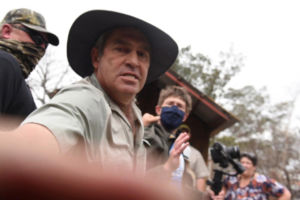
An unidentified farmer tries to stop photojournalist Tracy Lee Stark from taking photographs during a violent protest by farmers in Senekal, South Africa, on October 6, 2020. (Photo: The Citizen/Tracy Lee Stark)
South African authorities must conduct a swift and transparent investigation into recent attacks on journalists covering protests held by farmers, and hold those responsible to account, the Committee to Protect Journalists said today.
On October 6, in the Free State province town of Senekal, a protesting farmer harassed and assaulted Tracy Lee Stark, a photographer at The Citizen newspaper, while another attacked Marizka Coetzer, a reporter at the outlet, according to the journalists, who spoke to CPJ in phone interviews, and a report by their employer.
The demonstrators, who were protesting the murder of farmers in South Africa, gathered at a local court at the hearing of two people accused of torturing and murdering a local farmer, shouted insults at the journalists, and tried to prevent them from taking photos. One man punched Stark as he tried to grab her camera and another destroyed Coetzer’s smartphone, the journalists said.
“Journalists must be able to cover protests in South Africa without fear that they will be harassed, attacked, and see their equipment destroyed,” said Angela Quintal, CPJ’s Africa program coordinator. “Authorities must thoroughly investigate the recent attacks on The Citizen journalists Tracy Lee Stark and Marizka Coetzer and send a strong message that, just as there should be no impunity when it comes to attacks on farmers, there should be no impunity when it comes to crimes against journalists in the country.”
Stark told CPJ that the protest started peacefully but the tone changed after rousing speeches, including by Ernst Roets, the deputy CEO of the Afrikaner interest group AfriForum. Police arrested one farmer, Andre Pienaar, who is expected to be charged with public violence and malicious damage to property, according to newsreports.
Stark told CPJ that several protestors warned her not to photograph the gathering, but said she continued to do her job. One farmer called her a “liberal bitch” and shouted other insults, and then punched her in the shoulder and tried to grab her camera, she said.
“I held [the camera] tight and he threatened to smash it,” Stark said, adding that another protester intervened and escorted her to safety. She told CPJ that she was shaken but planned to continue covering such protests, saying, “I am a woman photographer. I have a point to prove.”
Coetzer told CPJ that she was reporting from a different area outside the courthouse, and was taking photos with her cellphone when another farmer confronted her and told her to stop filming.
Coetzer said she walked away and began filming in another area, when the same man followed her. She put her phone in her jacket, but the man grabbed it from her pocket, snapped it in two, flung it away, and told her to “fuck off.” Coetzer said she was unable to recover the memory card in her phone, which she had newly purchased, or any images she had taken.
In a statement, the South African National Editors’ Forum, a voluntary organization of editors and senior journalists, condemned the assaults, adding that “It is only through the decisive and firm actions of state organs that criminals and members of society will stop attacking journalists.”
Roets told CPJ via messaging app that AfriForum was “very alarmed” by what happened to the journalists, and said he tried to speak to Coetzer after he heard about the attack. Roets said that the violence was perpetrated by a small number of protesters after many of the farmers had dispersed, and said as far as he knew the demonstrators who attacked Stark and Coetzer were not AfriForum members.
Free State police spokesperson Brigadier Motantsi Makhele told CPJ via messaging app that the journalists had been advised to make a statement to police, and added that police planned to investigate the attacks and bring those responsible to justice.
Coetzer told CPJ she gave a statement to Silverton police today.
The attacks occurred on the same day the United Nations Human Rights Council adopted a newresolution on journalism safety which stated that the organization was deeply alarmed at the specific risks faced by women journalists.
The South African National Editors’ Forum (SANEF) is deeply concerned that journalists were assaulted and harassed on Tuesday when protesting farmers stormed the Senekal Magistrate’s Court in the Free State.
Citizen journalist Marizka Coetzer and photographer Tracy-Lee Stark were assaulted and their equipment damaged when a crowd of approximately 1 000 farmers protested outside the court against the murder of 22 year old Brendin Horner on Tuesday afternoon.
“… they requested that no photographs be taken, when I refused the request speaking in English, one farmer called me a ‘liberal bitch’ and I was physically assaulted and my camera was grabbed”, photographer Stark said.
“They threatened to smash it while pushing me around and continuing to physically assault me. Another farmer stepped in and told them to back off. I was told to leave the area immediately with continued shouting that I should remove my liberal self and leave for my own safety”, she said.
The violent protest in Senekal happened barely a day after writer and columnist, Ismail Lagardien was seriously injured covering abalone protests in Kleinmond, Western Cape that also turned violent on Monday 5 October.
SANEF is seriously troubled by the growing trend of communities attacking reporters seeking to vent their anger and frustration against government authorities. Journalists deserve the right to a safe working environment like all workers in South Africa. When going out in the field to tell community stories they should not be subjected to such hazardous and life-threatening working conditions.
We call on AfriForum, the Unite Against Farm Murders movement and various political parties, including the Democratic Alliance, that participated in the gathering before the court proceedings, to protect journalists and promote the safety of journalists. They need to help combat the impunity of those who attack the media.
We call on law-enforcement agencies to thoroughly investigate these incidents and to bring perpetrators to book. It is only through the decisive and firm actions of state organs that criminals and members of society will stop attacking journalists.
SANEF is campaigning for all traumatised journalists to receive counselling assistance from their employers.
Note to Editors: The South African National Editors’ Forum (SANEF) is a non-profit organisation whose members are editors, senior journalists and journalism trainers from all areas of the South African media. We are committed to championing South Africa’s hard-won freedom of expression and promoting quality, ethics and diversity in the South African media. We promote excellence in journalism through fighting for media freedom, writing policy submissions, research and education and training programmes. SANEF is not a union.
The South African National Editors’ Forum (SANEF) is deeply concerned by the attack on writer and columnist, Ismail Lagardien who was seriously injured covering the Kleinmond abalone protests on Monday 5th October 2020.
SANEF believes that every citizen should be seriously troubled by such reports as journalists go out in the field to tell community stories, both fairly and accurately. When a frustrated community turns its anger on journalists, it has severe consequences for our democracy. The media must reflect all sides in conflict situations – and the public must respect the essential role of the press.
Lagardien was seriously injured on Monday evening after protests erupted in the Overberg town of Kleinmond following the arrest of five alleged perlemoen poachers. Lagardien is now in hospital awaiting surgery for a broken jaw sustained when a brick flew in through the passenger window.
Relaying events via text message on Tuesday morning (he was unable to speak audibly due to his injury), he wrote: “I saw a roadblock and tyres being laid out, so I drove through, towards the informal settlements to find out more.”
At the time he had his equipment and camera out. “That’s when the rock came through the passenger window,” he said. Speaking from his hospital bed on Monday night, Mr Lagardien told Daily Maverick his jaw was fractured, and he had several teeth missing.
While at this stage it cannot be ascertained for sure if Lagardien was in fact targeted randomly as a motorist or specifically because he is a member of the media, this would not be the first time that journalists appear to have become the scapegoat of misdirected anger from some members of the public. These incidents include:
In February KayaFM journalist Gavin Emmanuel was assaulted and injured while covering a service delivery protest in Ga-Rankuwa, north of Pretoria. The township had come to a standstill after main roads were blockaded with rubble and burning tyres.
In Embalenhle, Secunda, in February, freelance journalist Desmond Latham, as well as a female staff member from Frayintermedia and female UNICEF employee were assaulted allegedly by members of a local taxi association.
Criminals robbed an eNCA reporter, Xoli Mngambi and a crew on assignment in Mamelodi East of their equipment in February.
Three journalists were held up at gunpoint and robbed of their belongings while covering a World Aids Day event in Khayelitsha last December.
In April, a SABC Durban news crew while out in the field reporting on the impact of the lockdown on rural communities in Ulundi, KwaZulu Natal, were blocked and threatened by a group, not related to their news story. Community members threatened to burn the SABC news vehicle.
One person has been arrested for public violence in Kleinmond, near the town of Hermanus, following the protests that erupted on Monday.
SANEF believes that attacks on media professionals are often perpetrated by organised opportunistic criminals, crime groups, militia and security personnel, making local journalists among the most vulnerable.
We call on every citizen to protect the right to freedom of opinion and expression for all. Promoting the safety of journalists and combatting impunity for those who attack them are central elements of democracy.
We call on law-enforcement agencies to thoroughly investigate these incidents and to bring perpetrators to book. It is only through the decisive and firm actions of state organs that criminals and members of society will stop attacking journalists.
SANEF is hoping that all traumatised journalists will receive counselling assistance from their employers. We wish Mr Lagardien a speedy recovery.
Note to Editors: The South African National Editors’ Forum (SANEF) is a non-profit organisation whose members are editors, senior journalists and journalism trainers from all areas of the South African media. We are committed to championing South Africa’s hard-won freedom of expression and promoting quality, ethics and diversity in the South African media. We promote excellence in journalism through fighting for media freedom, writing policy submissions, research and education and training programmes. SANEF is not a union.
The South African National Editors’ Forum (SANEF) is appalled by the misogynistic statement made by EFF leader Mbuyiseni Ndlozi condoning the harassment of a female journalist by EFF supporters.
Ndlozi owes ENCA journalist, Nobesuthu Hejana and the women of South Africa an apology.
SANEF is also calling on the Gender Commission and Parliament to investigate the matter.
Ndlozi tweeted in part, “That merely touching her is not harassment. The touch has to be violent, invasive or harmful to become harassment.”
Ndlozi was responding to a video showing ENCA journalist Hejana being harassed and intimidated by EFF supporters protesting outside a Clicks store in Goodwood mall on Tuesday.
In the video EFF supporters are clearly seen aggressively shoving Hejana and pushing her during a live crossing.
While it is unacceptable for anyone to be touching another person without their consent, in a country like ours, with alarming cases of gender based violence, it is horrifying that a member of parliament finds it okay for a group of men, to be harassing a woman.
It is equally horrific that Ndlozi thinks it is okay to tell women what constitutes harassment.
It is ironic that the incident happened during a protest by EFF, fighting for the dignity of black women and they themselves harassed a black woman.
SANEF has been highlighting the plight of women journalists over the years, as they are often vulnerable at protests, rallies and other political events of various parties.
Women journalists have reported being groped, sexually harassed and have reported lude comments being made to them.
Political reporters in particular have also decried newsmakers commenting about the size of their bums and breasts, hitting on them and telling them what they should wear when coming for an interview.
SANEF calls on all male and female political leaders to urge their supporters to respect women journalists and allow them to do their work in safety, free from intimidation and harassment.
Note to Editors: The South African National Editors’ Forum (SANEF) is a non-profit organisation whose members are editors, senior journalists and journalism trainers from all areas of the South African media. We are committed to championing South Africa’s hard-won freedom of expression and promoting quality, ethics and diversity in the South African media. We promote excellence in journalism through fighting for media freedom, writing policy submissions, research and education and training programmes. SANEF is not a union.
The South African National Editors’ Forum (SANEF) condemns the abuse and intimidation of SABC journalists including anchor, Peter Ndoro and SABC Foreign Editor, Sophie Mokoena by senior Zimbabwean government officials.
SANEF also notes with serious concern the vicious online and social media trolling of women journalists and media workers. Those behind the abuse are intimidating, sowing disinformation and discrediting the integrity of news media outlets that report on Zimbabwe’s political crises.
SANEF notes in particular the tweets by George Charamba, the Press Secretary in the Office of the President of Zimbabwe and Permanent Secretary in the Ministry of Information of Zimbabwe, who is behind the attacks on the two SABC staffers. His actions assisted by Nick Mangwana, Secretary for Information in Zimbabwe are creating significant professional harm. It must stop.
SANEF believes that this hostile environment is a direct attack on freedom of expression. Worldwide similar attacks are being meted out on journalists with the intent to silence their voice, especially that of women and the stories they tell.
Recently, the International Women’s Media Foundation (IWMF) stated that while journalists face harassment and attacks online every day, online attacks aimed at women reporters are growing and can result in women declining assignments – or leaving the industry altogether.
We note that cyber trolls often work together to amplify the attacks on women journalists. SANEF calls on media owners to ensure that journalists have access to networks that will support them such as the international Coalition on Online Abuse https://www.iwmf.org/coalition-on-online-abuse/
The journalism industry must urgently ensure the safety of journalists, especially women reporters. We believe that under Covid-19 conditions, the emotional support and safety of journalists is of paramount importance.
Note to Editors: The South African National Editors’ Forum (SANEF) is a non-profit organisation whose members are editors, senior journalists and journalism trainers from all areas of the South African media. We are committed to championing South Africa’s hard-won freedom of expression and promoting quality, ethics and diversity in the South African media. We promote excellence in journalism through fighting for media freedom, writing policy submissions, research and education and training programmes. SANEF is not a union.
The South African National Editors’ Forum (SANEF) condemns the abusive and intimidatory behaviour towards an eNCA news team covering the Economic Freedom Fighters (EFF) protest action at the Clicks store in Goodwood mall on Monday morning. The protesters chased away the team from the protest.
The EFF protest in Goodwood was among a number held at various Clicks stores around the country following an offensive hair advert that portrayed black hair as “dry and damaged” with the EFF demanding that the stores be shut down for at least a week.
eNCA reporter, Nobesuthu Hejana said that she and cameraman, Crescendo Louw had been reporting unhindered at the protest. They did a live crossing at 9am. Then when EFF chair Veronica Mente arrived to brief the media, one of the supporters in the crowd shouted that they, “would not speak to Rupert agents”. Things then deteriorated from there with Mente confirming that the EFF would not address the media until eNCA had left.
“Supporters became aggressive, forcing our cameraman to hurry up and leave,” said Hejana.
Mente said that they were blocking the eNCA crew in retaliation for the broadcaster withdrawing coverage of the party’s second elective conference in December last year. The eNCA had withdrawn in solidarity after the EFF banned various media outlets from covering the EFF conference.
Video footage indicates that the eNCA’s cameraman was insulted, sworn at and abused verbally by EFF supporters.
SANEF takes serious exception to this kind of intimidation and treatment of journalists by supporters of any political organisation. It is particularly worrying because the EFF is represented in the South African National Assembly and various provincial and local government legislature structures. The EFF is obliged by the South African Constitution to protect the freedom of the media, among other democratic fundamentals.
SANEF appeals to the EFF and its leadership to uphold the country’s Constitution, which guarantees the existence of the fourth estate as a key pillar of democracy.
We wish to remind the EFF leadership of the words of the founding father of South Africa’s democracy, Nelson Mandela who addressed the International Press Institute Congress on 14 February 1994 saying, “No single person, nobody of opinion, no political or religious doctrine, no political party or government can claim to have a monopoly on truth. For that reason, truth can be arrived at only through the untrammelled contest between and among competing opinions, in which as many viewpoints as possible are given a fair and equal hearing. It has therefore always been our contention that laws, mores, practices and prejudices that place constraints on freedom of expression are a disservice to society.”
We, therefore, call on all media freedom-loving South Africans to protect media rights against any individuals seeking to denigrate the country’s hard-won democratic principles of media freedom.
Note to Editors: The South African National Editors’ Forum (SANEF) is a non-profit organisation whose members are editors, senior journalists and journalism trainers from all areas of the South African media. We are committed to championing South Africa’s hard-won freedom of expression and promoting quality, ethics and diversity in the South African media. We promote excellence in journalism through fighting for media freedom, writing policy submissions, research and education and training programmes. SANEF is not a union.
The South African National Editors’ Forum (SANEF) condemns the threats made against a correspondent journalist working on a story for the Zoutpansberger and Limpopo Mirror.
The community newspapers in Limpopo have been investigating a story on the National Lotteries Commission’s funding of a non-profit organisation, Vyeboom Youth Development in the province.
According to Anton van Zyl, publisher of the Zoutpansberger and Limpopo Mirror, their correspondent received a threatening phone call on Thursday 23 July 2020 from a person telling him to stop enquiring about the activities at the project. He was told that if he did not stop, he would be followed and hurt.
Van Zyl said the correspondent had made enquiries requesting information about the non-profit which has received at least R15 million from the National Lotteries Commission (NLC) in the past few years. He said the matter was reported to the local police and a case of intimidation is being investigated.
“We don’t take kindly to such threats to our journalists, and we view it as a direct attack on media freedom and the constitutional values that we hold dear. The only way we can effectively respond to such threats is to shine a light on what is happening and try and establish why people would want to hide the truth,” Van Zyl said.
SANEF believes it is inexcusable for individuals to threaten the journalist. We trust that the police will give this matter the urgency it deserves and identify the culprits.
Further, SANEF is disturbed by the reluctance of the National Lotteries Commission to release information about NPOs that it is funding despite the Minister of Trade and Industry, Ebrahim Patel’s clear statement in reply to a Parliamentary question last month that the NLC must make the list of non-profit organisations that it funds available.
For 18 years, the NLC has published these and other details on projects it funds as part of its annual reports. But last year it did an about-turn and excluded this information from its 2018-19 report.
SANEF and Media Monitoring Africa (MMA) are proceeding with a court application which challenges the constitutionality of Regulation 8 of the Lotteries Act to ensure that it is either set aside in its entirety or amended to bring it in line with the Constitution. Regulation 8 limits the disclosure of information on grant applications and grants themselves. Regulation 8(3) renders any person who discloses and publishes such information guilty of a criminal offence. This prohibition extends even to situations in which the disclosure or publication of information would be in the public interest – for instance, in order to bring to light allegations of corruption or maladministration regarding the manner in which public funds are being spent.
Our legal counsel is of the view that the current wording of Regulation 8 is an unjustifiable limitation on the right to freedom of expression, and that journalists are at risk of facing future litigation or criminal complaints from the NLC. The broad aim of the legal challenge is to shield news publications and journalists, who may want to publish NLC grant information in future, from being subject to litigation or criminal complaints.
Note to Editors: The South African National Editors’ Forum (SANEF) is a non-profit organisation whose members are editors, senior journalists and journalism trainers from all areas of the South African media. We are committed to championing South Africa’s hard-won freedom of expression and promoting quality, ethics and diversity in the South African media. We promote excellence in journalism through fighting for media freedom, writing policy submissions, research and education and training programmes. SANEF is not a union.
This website uses cookies to improve your experience while you navigate through the website. Out of these cookies, the cookies that are categorised as necessary are stored on your browser as they are essential for the basic functionalities of the website. We also use third-party cookies that help us analyse and understand how you use this website. These cookies will be stored in your browser only with your consent. You also have the option to opt-out of these cookies. Opting out of some of these cookies may have an effect on your browsing experience.
Necessary
Always active
Necessary cookies are essential for the website to function properly. This category only includes cookies that ensures basic functionalities and security features of the website. These cookies do not store any personal information.
Preferences
The technical storage or access is necessary for the legitimate purpose of storing preferences that are not requested by the subscriber or user.
Analytics
Analytics cookies are used to track user behaviour on our website. We process these cookies to understand user engagement and improve user experience on our website.The technical storage or access that is used exclusively for anonymous statistical purposes. Without a subpoena, voluntary compliance on the part of your Internet Service Provider, or additional records from a third party, information stored or retrieved for this purpose alone cannot usually be used to identify you.
Marketing
The technical storage or access is required to create user profiles to send advertising, or to track the user on a website or across several websites for similar marketing purposes.