
Indigenous Languages are a Key to a Sustainable Media Landscape
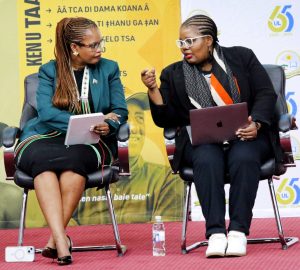
The promotion and commercialisation of Indigenous languages is a cultural imperative and a viable solution to the economic woes of news organisations, declared the 2025 Indigenous Languages and Media Seminar, held at the University of Limpopo on August 13th and 14th.
The two-day seminar underscored the critical role of South Africa’s Indigenous languages in revitalising the media industry. It was attended by the Chair of the Portfolio Committee on Communications and Digital Technologies, Ms. Khusela Diko-Sangoni.
The seminar, a collaboration between the South African National Editors’ Forum (SANEF), the Pan South African Language Board (PanSALB), and the University of Limpopo, brought together journalists, editors, civil society representatives, language practitioners, and academics to discuss the challenges and opportunities facing the sector.
The seminar began on a sombre note, with a powerful opening address from SANEF Media Freedom Committee chairperson, Slindile Khanyile, highlighting the harsh realities facing the industry, particularly the recent retrenchments at the Mail & Guardian, where many seasoned journalists lost their jobs due to a decline in advertising revenue.
To make matters worse, Khanyile bemoaned the fact that some of the retrenched journalists have not yet received their full severance packages, leaving them unable to pay their bonds, settle debts, or cover school fees for their children.
She emphasised that this was not an isolated incident but a frequent occurrence in legacy news organisations, which are struggling with declining revenue and audience migration to digital platforms. She painted a grim picture, noting that if major newsrooms are facing such a crisis, the situation is even more dire for smaller, community-based news organisations.
“These smaller organisations, however, possess a unique advantage: they are rooted in Indigenous languages. This presents a significant opportunity for growth and sustainability, provided their work receives the necessary support,” Khanyile said.
A Call for Commercialisation and Integrity
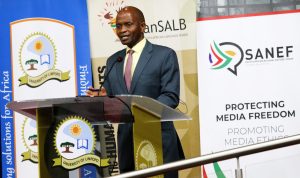
Echoing these sentiments,Victor Kgomoeswana, the University of Limpopo’s executive director for marketing and communications, stressed that while South Africa has made substantial progress with policies recognising Indigenous languages, it is time to take the next step.”
“This seminar is a platform to engage in how to do that through journalism and storytelling,” he said, adding that commercialising Indigenous languages would not only help preserve national heritage but also sustain news organisations, create jobs, and combat misinformation and disinformation.
Kgomoeswana, extending a warm welcome on behalf of the Vice-Chancellor and Principal, Professor Mahlo Mokgalong, emphasised the University of Limpopo’s role as a public institution that must actively engage with society. He also expressed deep gratitude to PanSALB for its work in preserving the country’s Indigenous languages11. According to Kgomoeswana, a fundamental impediment to justice, access to rights, progress, and transformation in South African society is a lack of respect for Indigenous languages across all sectors—socially, politically, culturally, and economically12.
Kgomoeswana praised SANEF as one of the country’s most important associations and described journalists as a “critical element” and the “fourth estate.” He asserted that, unlike politicians, journalists are often viewed as trustworthy and vital for uncovering truths, ensuring accountability, and bringing attention to injustices. He cited the courage of reporters who, during the Marikana incident, ran toward gunshots while others fled, demonstrating the dangers they face. He expressed hope that organizations like SANEF will help restore the integrity of the journalism profession and also highlighted the resilience of the country’s journalism, pointing to veteran reporters who continued their work even when television broadcasting stopped overnight.
PanSALB’s Commitment to Linguistic Diversity
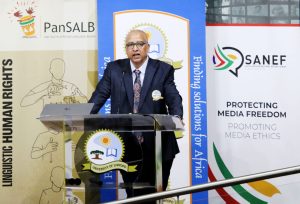
In his opening remarks, PanSALB CEO Lance Schultz articulated his organisation’s clear mandate: to preserve, promote, and protect South Africa’s rich linguistic diversity, which includes its 12 official languages, the Khoe and San languages, and South African Sign Language.
He stated that language is not just a communication tool but the very “heartbeat of our identity, culture, and heritage,” carrying the nation’s stories, histories, and aspirations.
Schultz described the seminar as a “call to action” acknowledging the persistent challenge of English and Afrikaans dominance in the media, which risks marginalising communities and eroding the cultural wealth embedded in Indigenous languages like isiZulu, isiXhosa, Sesotho, Xitsonga, and Tshivenda.
Schultz emphasised that promoting Indigenous languages was not just about preserving heritage, but about ensuring equitable access to information and empowering communities to participate fully in a democracy. He stressed a lack of respect for Indigenous languages that undermines their parity of esteem, and called for intentional collaboration among media houses, journalists, educators, parents, and policymakers to elevate these languages. He said PanSALB was committed to addressing these challenges through advocacy, policy development, and collaborations with partners such as SANEF and the University of Limpopo.
Furthermore, he highlighted initiatives like the Indigenous language journalism short course being developed by North-West University and SANEF, and the translation of the Press Council of South Africa’s Press Code into Indigenous languages as vital steps toward a more inclusive media ecosystem.
Schultz concluded by urging attendees to “redefine storytelling in a digital age” and to commit to “centring the voices of the village, our communities, through journalism that respects and celebrates our linguistic diversity”. He expressed confidence that, working together, a media landscape that truly reflects the “soul of our nation” can be built.
The Path Forward
The seminar provided a crucial platform for dialogue and action, exploring innovations in multilingual journalism, the role of community media, and the impact of artificial intelligence on language preservation.
The discussions highlighted that the global decline of print media and the rise of digital platforms presented both a challenge and an opportunity. Technology, through mobile apps, social media, and online content, was to be harnessed to make Indigenous languages accessible and relevant to younger generations.
As the International Decade of Indigenous Languages (2022–2032) continues, the seminar’s recommendations and their implementation, will be key to creating a more sustainable, inclusive, and vibrant media landscape in South Africa. The event served as a stark reminder that the future of South African media may well depend on embracing the richness of its own linguistic diversity.
ENDS