SANEF Elects New Leadership and Charts Course for Journalism in a Changing Environment
06 July 2026
The South African National Editors’ Forum (SANEF) successfully concluded its Annual General Meeting (AGM) in Pretoria on Saturday, 4 July 2026, reflecting on the organisation’s past 30 years while also forward looking at the issues confronting the journalism industry for the next 30 years.
At the crux of the deliberations were ethics in light of the recent incident and the changing dynamics that have redefined roles in the sector, including sustainability of the news industry and the emerging threats facing journalists both online and in the field.
Delegates agreed that while South African journalism remains resilient and vibrant, new battlefronts continue to emerge, requiring collective action by the media industry and broader society to protect journalists and strengthen democratic discourse.
The AGM elected the following office bearers to lead SANEF for the next term:
Chairperson: Katy Katopodis
Deputy Chairperson: Slindile Khanyile
Secretary-General: Professor Glenda Daniels
Treasurer-General: Sbu Ngalwa
The AGM also elected the following subcommittee chairpersons:
Media Freedom: Nicki Gules
Ethics and Diversity: Makhosazana Zwane-Siguqa
Education and Training: Dr Marenet Jordaan
Access to Information and Policy: Izak Minnaar
Safety and Wellness: Judy Sandison
Freelancers and Community Media: Dunisani Ntsanwisi
The following regional conveners were also elected:
Eastern Cape: Jude Mathurine
Gauteng: Dianne Hawker-Kalubi
KwaZulu-Natal: Judy Sandison
Western Cape: Professor Sisanda Nkoala
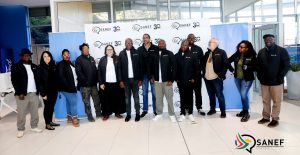
Welcoming the outcome of the AGM and the election of the new leadership team, SANEF Chairperson Katy Katopodis thanked members for their commitment to the organisation and reaffirmed SANEF’s determination to continue advancing media freedom and ethical journalism despite recent challenges.
“We’ve faced many challenges over the past few months, but we shouldn’t lose sight of the important role SANEF continues to play in defending journalism and media freedom in South Africa.”
“We’ve elected a strong Management Committee and Council, and that gives me enormous confidence about the future of the organisation.
Our ethics must remain our North Star. We must continue to hold ourselves and one another accountable as we work to strengthen SANEF and support journalists across the country,” said Katopodis.
The AGM expressed concern about the growing incidents of harassment, intimidation and cyberbullying directed at journalists covering marches and demonstrations related to undocumented migrants. Delegates noted that journalists increasingly find themselves exposed to hostile environments while carrying out their constitutional duty to inform the public.
While SANEF also reflected on the challenges associated with live reporting during these events, the organisation does not condone language captured in some media content that dehumanises or inappropriately refers to undocumented migrants. SANEF reaffirmed its commitment to ethical journalism and called on media practitioners to report fairly, accurately and responsibly while maintaining professional standards.
The AGM urged journalists and media organisations to prioritise safety and wellness considerations when covering potentially volatile situations. SANEF further resolved to seek an audience with organisers of the marches to establish common ground regarding the constitutional rights of journalists to work freely, safely and without intimidation, harassment or cyberbullying.
Electoral Code of Conduct
The SANEF AGM noted the publication of the draft Electoral Code of Conduct Countering Disinformation in Local Government Elections for public comment.
In April 2024, SANEF, with the support of media sector partners including the Press Council and Moxii Africa, submitted a Electoral Code of Conduct on Media Related Matters to the Independent Electoral Commission (IEC). The proposal sought to strengthen electoral information integrity by protecting media freedom, facilitating access to election-related information, and safeguarding journalists from harassment, intimidation and other obstacles while covering elections.
The AGM noted that the IEC subsequently indicated that the proposed Media Code and the Disinformation Code would be consolidated into a single framework. However, SANEF expressed concern that key media-related protections and provisions appear to have been omitted from the current draft. The AGM resolved that SANEF should engage further with the IEC to advocate for the inclusion of measures that ensure the safety and independence of journalists during the election period.
The AGM also welcomed progress made by the Media 20 ( M20) initiative, which promotes information integrity, media sustainability and press freedom within the G20 agenda. SANEF remains actively involved in advancing these objectives through its partnership with Moxii Africa, Alt Advisory and other global media freedom organisations.
Independent legal inquiry
SANEF noted the reaction of the Special Investigation Unit to its statement issued on 03 Jul 2026 in response to the SANEF statement last week explaining the conclusion of an independent legal investigation into allegations involving its former chairperson, Mr Makhudu Sefara.
The SANEF AGM wishes to clarify that the statement it issued, only focused on and referred to the outcomes of SANEF’s internal inquiry – it did not claim that the SIU had cleared Mr Safara. The statement correctly quoted aspects of the SIU letter.
Notwithstanding, the AGM proposed that it would be prudent for the newly elected management committee to meet with the SIU.
The meeting noted, with grave concern, that SANEF’s Independent legal inquiry found that Mr Sefara was in fact made aware – just a few days before the training – of where the money came from and that it was from the National Lotteries Commission (NLC). AGM said it was deeply regrettable that Mr Sefara repeatedly told the organisation that he was not aware.
The meeting resolved to strengthen the organisation ethic codes by reviewing its disclosure policy to ensure that all members of council and management committee declare upfront and regularly disclose business activities or financial interests.
SANEF is using this difficult experience to ensure that the lessons learned from the matter continue to be taught, shared, and effectuated through its own internal processes as guided by its own Constitution and ethical code.
Yesterday’s elective AGM and subsequent election results of Council is indicative of SANEF‘s commitment to media freedom, media ethics and media trust. The forum will continue to work to ensure that the integrity and ethical standards of the organisation are not compromised.
Journalism Skills Audit
The AGHM unanimously endorsed a proposal by the Education and Training subcommittee to undertake a comprehensive national journalism skills audit, marking the first such exercise in 25 years. The audit will assess the current skills, training needs and preparedness of journalists, editors, newsrooms and journalism training institutions in an era shaped by digital transformation, artificial intelligence and changing newsroom realities. Delegates agreed that the study will provide critical evidence to help align journalism education and training with the evolving needs of the industry, while identifying skills gaps and opportunities to strengthen the profession for the future.
Elections Training
The AGM welcomed the successful completion of SANEF’s nationwide media training programme, which reached an estimated 700 journalists across all nine provinces. Delegates congratulated the Education and Training Subcommittee and SANEF’s partners on delivering one of the organisation’s most impactful capacity-building initiatives.
The programme was implemented in partnership with the Independent Electoral Commission (IEC), Moxii Africa, Africa Check and the South African Local Government Association (SALGA). The training reached journalists in metropolitan, regional, community and rural media sectors, equipping them with knowledge about electoral processes, local government reporting and tools to identify and counter misinformation and disinformation.
The AGM expressed appreciation to all partners whose commitment ensured that journalists from every corner of South Africa benefited from the programme. SANEF also announced that further training focusing on the safety and protection of journalists ahead of the local government elections will be held in September.
Fourth Indigenous Languages and the Media Seminar
Delegates further welcomed preparations for the Fourth Indigenous Languages and the Media Seminar, which SANEF will host in partnership with the University of Fort Hare, the Pan South African Language Board (PanSALB) and the Media Development and Diversity Agency (MDDA) in East London (KuGompo City) on 13 August 2026.
The seminar forms part of global efforts supporting the United Nations International Decade of Indigenous Languages (2022–2032), led by UNESCO. The initiative seeks to prevent language extinction, preserve linguistic diversity and empower communities to pass indigenous languages on to future generations.
SANEF and its partners believe that the media has a vital responsibility to promote, preserve and strengthen South Africa’s rich linguistic heritage. Through journalism, broadcasting and digital storytelling, the media can play a significant role in ensuring that indigenous languages remain visible, relevant and accessible to future generations.
As the newly elected leadership assumes office, SANEF remains committed to defending media freedom, promoting ethical journalism, strengthening newsroom sustainability, advancing diversity and inclusion, protecting journalists, and ensuring that quality journalism continues to serve the public interest in South Africa’s constitutional democracy.
ENDS
Note to Editors:
The South African National Editors’ Forum (SANEF) is a non-profit organisation whose members are editors, senior journalists, and journalism trainers from all areas of South African media. We are committed to championing South Africa’s hard-won freedom of expression and promoting quality, ethics, and diversity in the South African media. We promote excellence in journalism by fighting for media freedom, writing policy submissions, conducting research, and providing education and training programmes. SANEF is not a union.
For more information, please contact:
Katy Katopodis – Chairperson (082) 805-7022
Slindile Khanyile – Deputy Chairperson (083) 471-0367
Glenda Daniels – Secretary-General (083) 229-9708
Sbu Ngalwa – Treasurer-General (073) 404-1415
Nicki Gules – Media Freedom Chair (082) 6034101
Judy Sandison – Wellness and Safety Chair (082) 571-3334
Dianne Hawker – Gauteng Convenor (072) 016-5984
Judy Sandison – KZN Convenor (082) 571-3334
Jude Mathurine – Eastern Cape Convenor (083) 799-1701
Sisanda Nkoala – Western Cape Convenor (073) 138-5564
Reggy Moalusi – Executive Director (071) 682-3695
Twitter: @SAEditorsForum
Email: [email protected]
Website: www.SANEF.org.za