SANEF is deeply concerned by reports that former Star editor Sifiso Mahlangu was allegedly involved with the MKP from its inception while occupying one of the most senior positions in journalism.
As a matter of principle, SANEF strongly condemns any editor or journalist engaging in political activity. The role of an editor demands independence, impartiality, credibility and the unwavering trust of the public. Any blurring of the lines between journalism and party politics fundamentally undermines public confidence in the media and damages the integrity of the profession as a whole.
It is particularly ill-advised for an editor to be associated with the formation of a political party, as this raises serious questions around conflict of interest, editorial independence and the potential erosion of ethical newsroom standards.
At a time when trust in institutions, including the media, is already under pressure, perceptions of political alignment by senior journalists are profoundly damaging.
While Mahlangu was not a member of SANEF, and The Star is not a member of the Press Council, the principle remains critically important and applies across the media industry.
Note to Editors:
The South African National Editors’ Forum (SANEF) is a non-profit organisation whose members are editors, senior journalists, and journalism trainers from all areas of South African media. We are committed to championing South Africa’s hard-won freedom of expression and promoting quality, ethics, and diversity in the South African media. We promote excellence in journalism by fighting for media freedom, writing policy submissions, conducting research, and providing education and training programmes. SANEF is not a union.
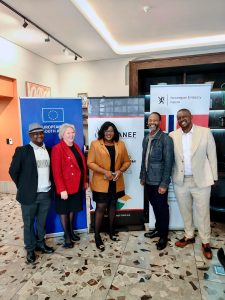
Norwegian Ambassador in SA Anne Beathe Kristiansen joined by Hopewell Radebe on her left, Dzudzie Netshisaulu on her right, Dr Philani Mthembu of the Institute for Global Dialogue and SANEF ED Reggy Moalusi
In a world increasingly crowded by crises, the quiet persistence of suffering risks being drowned out by the noise of new conflicts. This was the sobering message delivered by Norway’s Ambassador to South Africa, Anne Beathe Kristiansen, at a high-level engagement in Johannesburg convened by the South African National Editors’ Forum (SANEF) in partnership with the Royal Norwegian Embassy in Pretoria.
Speaking with urgency and candour, Kristiansen warned that the escalating confrontation involving Iran, the United States and Israel is rapidly shifting global attention away from the ongoing devastation in Ukraine. “Many conflicts compete for our attention, all of them tragic,” she said, reminding delegates that even as headlines move on, the human toll does not. She pointed to Sudan, marking three years since war erupted there, now one of the world’s gravest humanitarian disasters, and to the unrelenting suffering in Gaza. “I could go on and on,” she added, her words carrying both weariness and resolve.
Yet it was Ukraine that anchored the day’s reflection. As the war entered its fifth year, the gathering grappled with a difficult question: what happens when a war fades from the world’s gaze yet remains in reality? The consequences, participants agreed, are neither distant nor abstract. Across Africa, the war has already disrupted food and energy supplies, driven inflation and deepened economic fragility. With global crises multiplying, there is a real risk that a “forgotten war” could further destabilise an already strained international system.
Kristiansen’s address cut to the heart of a deeper concern, the erosion of international law. She warned of “flagrant violations” by powerful nations, cautioning against a world where rules painstakingly built over decades are ignored. “We cannot afford that the world reverts to anarchy in international politics,” she said. “We must be clear on international law and respect for each country’s territorial integrity and sovereignty.”
Drawing from Norway’s own history, she offered a poignant illustration. A small nation sharing a 200-year border with Russia, Norway had long enjoyed cooperation with its neighbour, remarkably without ever having gone to war. Yet Russia’s invasion of Ukraine, she said, triggered a political earthquake at home, forcing a dramatic shift in defence priorities. “When Russia does not respect Ukraine’s sovereignty, how can we be certain it will respect ours?” she asked.
The war’s ripple effects, she stressed, are global. Beyond rising food and fertiliser costs, resources once earmarked for development, particularly in Africa, are being redirected toward war efforts. This diversion, combined with mounting instability, threatens to stall progress toward critical development goals.
Central to the day’s dialogue was the role of the media. Kristiansen underscored the responsibility of a free press in shaping understanding, particularly in an era marked by disinformation and competing narratives. While Norway continues to rank among the world’s leaders in press freedom, she noted starkly different conditions in Russia, where journalists face suppression and intimidation. South Africa, she said, holds a vital position: to report with independence, grounded not in external agendas but in African realities and interests. “Language shapes perception,” she reminded the room, urging journalists to engage critically and courageously.
Ukraine’s Ambassador to South Africa, Olexander Scherba, reinforced the human dimension of the war, revealing that more than eight million people have been displaced beyond Ukraine’s borders. He described a country scarred by destruction and trauma, its suffering often under-reported and insufficiently understood by the international community.
Adding analytical depth, Dr Philani Mthembu of the Institute for Global Dialogue highlighted how the war erupted at a pivotal moment, just as developing nations sought to recover from the COVID-19 pandemic. Instead of renewed focus on development, he noted, global priorities shifted toward military expenditure. The result has been widespread economic disruption, with severe implications for food security across Africa.
Ambassador Sandra Kramer of the European Union Delegation reaffirmed the EU’s unwavering support for Ukraine, emphasising that the defence of sovereignty and international law remains non-negotiable.
As the colloquium unfolded, it became clear that this was more than a discussion about distant war. It was a call to vigilance. A reminder that in a fragmented world, attention is power, and its absence, a quiet enabler of prolonged suffering.
The South African National Editors’ Forum (SANEF) is appalled by the behaviour of Ms Jacinta Ngobese-Zuma and some of her followers who have sought to intimidate the Sowetan editor, Sibongakonke Shoba, and his family.
The March and March Movement leader chose to attack Shoba after he wrote a stinging column last Friday about this organisation’s behaviour towards foreign nationals. Shoba has since been subjected to threatening messages via social media, with some of the tormentors hiding behind fake profiles.
Some have gone so far as to retrieve, through social media, and circulate pictures of Shoba and his family. This is sheer intimidation and harassment of a journalist intended to silence him.
SANEF condemns such behaviour and calls on law enforcement agencies to investigate it as dangerous and anti-democratic. Journalists, like any other South African, have a constitutionally guaranteed right to freedom of speech.
Ngobese-Zuma also sent a letter from her lawyers challenging Shoba’s opinion piece and demanding that it be retracted and taken down.
SANEF is encouraged that the Sowetan’s lawyers have written back to Ngobese-Zuma informing her that Shoba has a constitutional right to free speech and that the article will not be retracted.
SANEF reiterates that xenophobia has no place in our society. When one of our member editors condemns the behaviour of xenophobes, we will always be behind them. The media, through the Press Code and Broadcast Complaints Commission of SA (BCCSA), operates within the confines of these codes and the country’s constitution. Anyone who feels aggrieved by the work of any journalist, publication, or media organisation can approach the Press Ombudsman or the BCCSA to complain, without attracting legal fees.
SANEF has also encouraged Shoba to open a criminal case against Ngobese-Zuma and her followers.
Ends.
Note to Editors:
The South African National Editors’ Forum (SANEF) is a non-profit organisation whose members are editors, senior journalists, and journalism trainers from all areas of South African media. We are committed to championing South Africa’s hard-won freedom of expression and promoting quality, ethics, and diversity in the South African media. We promote excellence in journalism by fighting for media freedom, writing policy submissions, conducting research, and providing education and training programmes. SANEF is not a union.
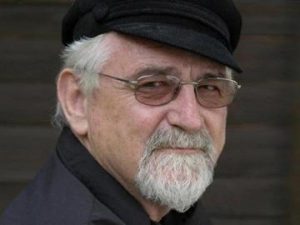
Veteran human rights activist, labour writer and journalist, Terry Bell.
The South African National Editors’ Forum (SANEF) mourns the passing of veteran human rights activist, labour writer and journalist, Terry Bell, who died on the morning of Wednesday, 25 March, while on a trip with his family to the Eastern Cape.
According to his daughter, Ceiren Bell, a freelance animator specialising in hand-drawn educational animations, her father leaves behind “an enormous absence and an incredible legacy.”
Bell’s life was one of unwavering commitment to justice, dignity, and the power of the written word. He stood at the intersection of activism and journalism, telling the stories of workers, amplifying the voices of the marginalised, and holding power to account with courage and conviction.
Writing in the WhatsApp media group, media veteran Mathatha Tsedu paid a moving tribute, recalling Bell’s lifelong partnership with his late wife Barbara.
“Terry and his late wife Barbara were the team that couldn’t be separated… he had to follow,” he said.
Tsedu remembered the long hours of struggle and solidarity, recounting how Bell connected local resistance to international support:
“I recall being taken to the 14-hour non-stop protest outside the racist South African embassy in London. There was co-operation between the Anti-Apartheid Movement (AAM) London Group, facilitated by the other never-say-die activist Lionel Morrison, and the farm workers at Zebediela citrus. It was solidarity that gave workers hope and strength, to know that far away in London, their struggles were being supported through the Outspan boycott.”
He added: “At the centre of it all was Terry Bell, through whom I would send all my latest stories on the strike for use by the protesters. There were no emails or WhatsApp then, just Telex. Go well, workers’ activist for life. I am tempted to imagine you writing columns wherever you are, cajoling and persuading for good. Rest, Soldier.”
Tributes have poured in from across the media and broader society, painting a portrait of a man who was not only principled but deeply human.
“So sorry to hear this. Terry was one of a kind. Immensely warm, wonderfully driven and an eternal fighter for right. Go well, Terry.”
Journalist Ann Crotty described him as “one of the best human beings” she ever knew:
“He loved life and lived it fully. He and his family were the most loved. He was also quite mischievous and had a delightful sense of fun. He is a huge loss.”
Marion Edmunds said: “He was a most wonderful friend and colleague that I trusted completely and admired greatly. He was very principled, both politically and personally.”
SANEF founder member Guy Berger recalled a recent encounter that captured Bell’s enduring spirit: “I saw Terry in action just last Sunday at the Masque Theatre, where the series Untold Courage about Horst Kleinschmidt, Beyers Naude and Cedric Mason was showing. He urged everyone there to action. Many will share that memory.”
Political analyst Moeletsi Mbeki reflected on their last meeting: “I am very sad to hear about Terry’s passing. Only a few days ago, he attended a presentation I made at the Cape Town branch of the SA Institute of International Affairs. He was very cheerful as usual and made lots of constructive suggestions. The topic of the presentation was what is next after 100 years of Nationalism, 1924 – 2024. We had lots of laughs.”
Writer Fred Khumalo described Bell as “a man of ideas… generous, always eager to help and full of life.”
Former Ombud Pippa Green said: “Terry made a huge contribution to journalism and to democracy. He was also always so cheerful and funny – a real treasure to spend time with… No time was ever enough with Terry. His loss leaves a huge hole in so many hearts.”
SANEF joins the many voices across the country and beyond in honouring a life lived in service of truth, justice, and humanity. Terry Bell’s legacy will endure in the stories he told, the struggles he championed, and the countless lives he touched.
SANEF expresses its deepest condolences to his family, friends, colleagues, and the broader media fraternity.
Ends
Note to Editors:
The South African National Editors’ Forum (SANEF) is a non-profit organisation whose members are editors, senior journalists, and journalism trainers from all areas of South African media. We are committed to championing South Africa’s hard-won freedom of expression and promoting quality, ethics, and diversity in the South African media. We promote excellence in journalism by fighting for media freedom, writing policy submissions, conducting research, and providing education and training programmes. SANEF is not a union.
The countdown has officially begun. There are now only 11 days left to submit entries for the prestigious Standard Bank Sikuvile Journalism Awards.
The final deadline for submissions is 31 March 2026, and journalists across the country are encouraged not to wait until the last week or worse, the final day to submit their work.
With a tight judging schedule and extensive preparations required ahead of the awards ceremony in June, the partners South African National Editors’ Forum (SANEF) and Standard Bank, are calling on journalists to act now and secure their entries well before the closing date.
Avoid the Last-Minute Rush
Previous years have shown that waiting until the final hours can come at a high cost. Several entries have unfortunately arrived after the deadline and were disqualified, despite the quality of the work submitted.
In some cases, journalists cited electricity load-shedding, internet disruptions, and email server problems as reasons why their submissions could not be sent in time. While these challenges are understood, late submissions cannot be accommodated once the deadline has passed.
This is why SANEF and Standard Bank are urging journalists to submit early and avoid unnecessary disappointment.
Your Journalism Deserves Recognition
The awards remain South Africa’s most respected platform for recognising impactful, daring, and public-interest journalism.
Whether your work shines in investigative reporting, breaking news, feature writing, business and politics reporting, or photojournalism, this is an opportunity to showcase the stories that have informed the nation and held power to account.
Since the call for entries opened on 2 February 2026, journalists working across print, digital, radio, and television platforms have been invited to submit their best work published or broadcast between 1 January and 31 December 2025. If you have not yet submitted your work, now is the moment to act.
Virginia Magapatona, Standard Bank Group Head of Communications, says: “These awards reflect our belief that excellent journalism deserves to be celebrated and that the people behind it deserve to be recognised. Across the world, the media is navigating seismic shifts in changing news consumption habits and the threat of unverified information. As these pressures intensify, the need for trustworthy and verifiable journalism has never been greater. South Africa’s media fraternity continues to demonstrate courage, integrity and an unwavering commitment to the truth. I encourage all journalists to enter their work for the Standard Bank Sikuvile Awards. Your stories have already made an impact on society. Now let’s celebrate them together.”
Makhudu Sefara, SANEF chairperson and editor of the Sunday Times, urged journalists to resist the temptation to delay taking action any further.
“Procrastination is the enemy of opportunity. Submit your entries while there is still time, do not risk missing out due to unforeseen circumstances,” said Sefara, adding that undecided journalists should consult their news editors and senior colleagues to help them select their best work of 2025.
The Standard Bank Sikuvile Journalism Awards have become South Africa’s yardstick for journalistic excellence, celebrating work that informs the public, inspires society, and strengthens democracy.
As the country’s leading media advocacy organisation, the South African National Editors’ Forum continues to champion ethical, courageous, and high-quality journalism, ensuring that the awards remain a benchmark for integrity, quality, and impact in the media sector.
Do Not Miss Out
At a time when misinformation and disinformation threaten public trust in information, the awards emphasise the importance of accurate, fact-based, fair, and daring reporting.
They stand as a tribute to the enduring role of journalism, the Fourth Estate, in holding power accountable and safeguarding South Africa’s democracy.
Journalists are therefore encouraged to ensure their entries are submitted well before the 31 March deadline to avoid any last-minute technical challenges.
Journalists and media professionals are encouraged to download declaration forms from the website https://sikuvileawards.co.za.
We kindly request that all forms be digitally completed or typed to assist with legibility and accurate record-keeping. Handwritten submissions will not be accepted. Submit the entries via email, together with the forms and samples of the stories, to [email protected].
Detailed submission guidelines and category requirements are available at the official website: https://sikuvileawards.co.za.
About the Standard Bank Sikuvile Journalism Awards
The Standard Bank Sikuvile Journalism Awards recognise and encourage outstanding journalistic work across South Africa. Over the years, the awards have become a cornerstone of excellence in the profession, highlighting the essential role the media plays in strengthening democracy.
The South African National Editors’ Forum has organised the awards since taking over the responsibility from Publishers’ Support Services (formerly PDMSA). The awards celebrate excellence across all media platforms, including print, digital/online, radio, television, and photojournalism.
Contact Information:
For further inquiries, please contact the SANEF Secretariat:
The South African National Editors’ Forum (SANEF) is saddened by the untimely passing of City Press journalist Nompumelelo Magagula, a committed reporter whose work contributed meaningfully to telling the stories of South Africans.
During her time at City Press, Magagula distinguished herself as a versatile and compassionate storyteller. She reported on a wide range of issues, from entertainment and cultural developments to deeply human stories affecting communities across the country.
Her reporting reflected a journalist who understood the power of storytelling in capturing the spirit of South African life. Through her work, she gave readers insight into the people behind the headlines and ensured that their voices were heard.
Tim Molobi, City Press’ news editor, described her as lively and lovely in the newsroom. “She was a diligent worker and a go-getter of note. The industry has lost a vibrant and excellent journalist who still had a lot to offer.”
Magagula’s journey in journalism began as early as 2011 while she was still in high school. She volunteered as a content producer and presenter at Kangala Community Radio Station in Ekangala, Mpumalanga, where she helped produce and present several programmes. Her early exposure to community broadcasting helped shape her love for the profession and gave her practical experience in the newsroom environment.
She stepped away from the station in 2014 to focus on completing her matric year.
In 2015, Magagula moved to Witbank, where she joined Emalahleni FM. There she worked as a translator, converting news bulletins from English into isiNdebele between January and December of that year. She also served as a newsreader and standby presenter, gaining valuable on-air and newsroom experience.
Magagula continued to pursue her academic and professional development in journalism. In 2018, while studying towards her Diploma in Journalism, she joined Media24’s City Press as a journalism intern.
Among her many contributions were features and reports on South Africa’s cultural and entertainment landscape, including coverage of prominent personalities and events that shape the country’s public life, according to News24.
SANEF believes that journalists like Magagula form the backbone of South Africa’s democratic discourse. Through their work, they inform, educate, and connect society. Her passing, therefore, represents not only a personal loss to those who knew and loved her but also a professional loss to the newsroom community.
Journalists operate under immense pressure to meet deadlines and uncover the truth, and Magagula exemplified the dedication and resilience that define the profession.
SANEF extends its deepest condolences to Magagula’s family, friends, and all journalists who had the privilege of working alongside her.
Note to Editors:
The South African National Editors’ Forum (SANEF) is a non-profit organisation whose members are editors, senior journalists, and journalism trainers from all areas of South African media. We are committed to championing South Africa’s hard-won freedom of expression and promoting quality, ethics, and diversity in the South African media. We promote excellence in journalism by fighting for media freedom, writing policy submissions, conducting research, and providing education and training programmes. SANEF is not a union.
The South African National Editors’ Forum (SANEF) and the Independent Electoral Commission of South Africa (IEC) will host the second leg of the nationwide election media training programme in Polokwane, Limpopo, on Tuesday, 17 March 2026, as part of ongoing preparations for the 2026/27 Local Government Elections.
The training will take place at the Park Inn by Radisson Polokwane and will bring together journalists from community, regional and national media outlets across the province.
The programme forms part of a nationwide initiative announced last week by IEC Chief Electoral Officer, Sy Mamabolo, during a national media briefing held in Centurion, Pretoria, where he outlined the Commission’s preparations for the upcoming municipal elections.
The media training programme is implemented in partnership with SANEF, the South African Local Government Association (SALGA), the Media Development and Diversity Agency (MDDA), Africa Check and Moxii Africa. The event will be addressed by Limpopo Electoral Officer Ms. Nkaro Matela.
The initiative aims to strengthen election reporting by equipping journalists with a deeper understanding of the legislative framework governing elections, electoral processes and the regulatory environment within which political parties, candidates and electoral institutions operate.
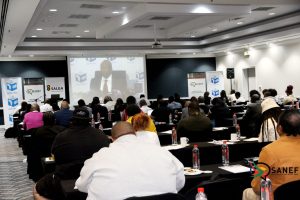
The Limpopo training follows the successful launch of the programme in Durban, KwaZulu-Natal, on 10 March 2026, where over 100 journalists from across the province gathered for the first session of the nationwide training programme.
Speaking during the media briefing last week, Mamabolo underscored the vital role played by the media in safeguarding electoral democracy and ensuring that voters receive credible and accurate information.
“The Electoral Commission acknowledges and appreciates the vital role played by the media in electoral democracy and in the dissemination of credible information,” said Mamabolo.
“The free flow of credible information about political parties, candidates, voting station operations and electoral regulations is a prerequisite for free and fair elections.”
He added that the partnership between the IEC and other stakeholders seeks to strengthen the capacity of journalists to report responsibly and accurately during the election period.
“The purpose of the programme is to equip journalists with a comprehensive understanding of the legislative framework, electoral processes and regulatory environment, thereby strengthening the possibility for accurate, ethical and informed reporting throughout the election period,” Mamabolo said.
The training programme will cover key aspects of election reporting including the legal framework governing elections, the role and responsibilities of the Electoral Commission, candidate nomination processes, voting station operations and the broader electoral timetable.
Journalists will also receive guidance on navigating the increasingly complex digital information environment, including identifying and countering misinformation and disinformation that could undermine public confidence in the electoral process.
The partners believe that strengthening the capacity of journalists is critical to protecting the integrity of the electoral process and ensuring that citizens are well informed ahead of the 2026/27 Local Government Elections.
The nationwide training programme will continue to Mahikeng in the North West Province next week. The details will be announced soon. The roll out will then procced to other provinces over the coming months as preparations intensify for the municipal polls.
Issued by:
South African National Editors’ Forum (SANEF)
For media enquiries:
IEC spokesperson, Kate Bapela – 0826006386 or [email protected]
SANEF: Executive Director Reggy Moalusi – 0716823695 or [email protected]
SALGA: SALGA Spokesperson, Motalatale Modiba – 0725253022 or [email protected]
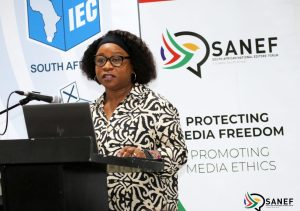
KZN Electoral Officer Ntomb’futhi Masinga kicks off the media training initiative in Durban, KwaZulu-Natal, on Tuesday, March 10
The Electoral Commission of South Africa has partnered with the South African National Editors’ Forum and several media and governance organisations to roll out a nationwide training programme for journalists ahead of the 2026/27 Local Government Elections, a move aimed at strengthening credible reporting and safeguarding the integrity of South Africa’s electoral process.
The initiative was highlighted by the IEC’s Chief Electoral Officer, Sy Mamabolo, during a media briefing at the Commission’s headquarters in Centurion on Tuesday, 10 March 2026, where he outlined the state of readiness for the upcoming municipal elections and the key developments shaping the country’s electoral landscape.
Mamabolo told journalists that the Electoral Commission recognises the critical role played by the media in ensuring that citizens receive credible and accurate information during elections.
Chief Electoral Officer Sy Mamabolo briefing the media
“The Electoral Commission acknowledges and appreciates the vital role played by the media in electoral democracy and in the dissemination of credible information,” Mamabolo said. “The free flow of credible information about political parties, candidates, voting station operations and electoral regulations is a prerequisite for free and fair elections.”
He said the IEC has therefore partnered with SANEF and other stakeholders to embark on a nationwide training programme aimed at equipping journalists with the knowledge and tools needed to report responsibly and accurately on election-related matters.
The programme is being implemented in collaboration with the South African Local Government Association, the Media Development and Diversity Agency, Africa Check and Moxii Africa. The partners will work together to train journalists from community, regional and national media organisations on the legislative framework governing elections, electoral processes and the broader regulatory environment.
The training initiative began in Durban, KwaZulu-Natal, on Tuesday (March 10) and will expand to other provinces over the coming months as part of a nationwide effort to prepare the media for the complex task of covering the elections.
The programme is designed to strengthen the quality of reporting during the election period by helping journalists better understand electoral procedures, the functioning of voting stations, the nomination of candidates and the rules governing political campaigning.
The training will also help journalists navigate the increasingly complex digital information environment, including the growing threat of misinformation and disinformation that can undermine public trust in elections.
The media briefing formed part of the IEC’s ongoing engagement with journalists as preparations gather momentum toward the country’s next municipal polls.
Mamabolo said the Commission is working on the planning assumption that it must be ready to administer elections whenever they are lawfully called. While the election date has not yet been proclaimed, preparations have already reached several important milestones.
Among these is the announcement of a nationwide voter registration weekend scheduled for 20–21 June 2026, which aims to maximise opportunities for eligible citizens to register or update their details closer to where they reside.
“The intended outcome of the registration weekend is to facilitate access to the franchise and broaden electoral participation,” Mamabolo said.
Once the election date is proclaimed by the Minister of Cooperative Governance and Traditional Affairs, voters will have until midnight on that day to register to vote. The proclamation will also formally trigger the election timetable, including the certification and publication of the voters’ roll, the inspection and objection period, and the submission of candidate nominations.
Mamabolo stressed that early announcement of the election date is important because voters must register where they will be on voting day. In local government elections, citizens can only vote at the voting station where they are registered because councillors represent specific wards tied to a voter’s place of residence.
Another major preparatory process nearing completion is the ward delimitation exercise conducted by the Municipal Demarcation Board.
Mamabolo said that by December 2025 the board had finalised and handed over 4,305 wards, representing about 95% of all wards nationally. The remaining wards to be finalised are located in four municipalities in KwaZulu-Natal — eThekwini, Mkhambathini, Inkosi Langalibalele and Alfred Duma — where court proceedings had delayed the process.
Changes in ward boundaries have also required adjustments to voting districts. According to the Commission, 1,865 voting districts — about 8% of the national total — have been subdivided to align with the new ward boundaries and ensure balanced voter populations.
KwaZulu-Natal and Gauteng account for roughly 45% of the affected districts, followed by Mpumalanga and North West.
At the same time, voter registration activity is showing encouraging signs. Between November 2025 and March 2026, the Commission recorded 260,205 new voter registrations, with almost half of them completed through the IEC’s online self-registration portal.
Mamabolo said the steady increase reflects the impact of the Commission’s nationwide online registration campaign and its broader efforts to encourage citizens to register early and verify their details on the voters’ roll.
The Commission has also intensified its voter education programmes across the country. A total of 530 Municipal Outreach Coordinators have been deployed to strengthen civic and democracy education at grassroots level.
Since the start of the current financial year, IEC outreach initiatives have reached more than 3.43 million people through community engagements across all nine provinces.
Mamabolo said these programmes are particularly focused on encouraging first-time voters and young people to participate actively in the democratic process.
The Commission has also scaled up its contact centre to respond to voter enquiries and provide information on registration processes and electoral procedures. Since January 2026, the centre has handled about 27,000 interactions across voice calls, email, live chats and social media platforms.
Meanwhile, recruitment and training of registration staff is underway ahead of the June registration weekend. The Commission has implemented strict selection criteria designed to ensure that electoral officials are independent, non-partisan and capable of operating in demanding environments.
Despite the logistical complexities involved in organising a nationwide election, Mamabolo said the Commission remains confident in its preparations.
He pointed to the successful conduct of 25 by-elections between November 2025 and February 2026 as evidence of the IEC’s continued operational readiness.
As the country moves closer to the next municipal elections, Mamabolo urged South Africans to take the first step in participating in the democratic process by registering to vote and ensuring their details on the voters’ roll are accurate and up to date.
SANEF, IEC, SALGA, MDDA and Moxii Africa launch nationwide elections training for journalists ahead of 2026 Local Government Elections
08 March 2026
The South African National Editors’ Forum (SANEF), in collaboration with the Independent Electoral Commission of South Africa (IEC), the South African Local Government Association (SALGA), the Media Development and Diversity Agency (MDDA), Africa Check, and Moxii Africa, is launching a nationwide training programme for journalists in preparation for the 2026 Local Government Elections.
The training initiative will kick off in Durban, KwaZulu-Natal, on Tuesday, March 10, and will subsequently expand to other provinces over the coming months. This programme aims to equip journalists from community, regional, and national media with essential skills to navigate the complexities of the electoral landscape.
Focused on enhancing the capabilities of journalists throughout South Africa, the initiative seeks to promote accurate, responsible reporting in the public interest during this crucial democratic process.
Each workshop will convene journalists, election officials, academics, and media experts to discuss key topics influencing the upcoming elections and the media’s role in safeguarding democracy.
The curriculum will encompass a diverse range of subjects vital to credible election reporting. Notable topics will include an overview of the evolution of local government in South Africa, presented by SALGA, which will examine the development of the local government system, significant milestones in democratic governance, and critical challenges facing municipalities in the lead-up to the 2026 elections.
The IEC will inform journalists about the state of readiness for the elections, detailing the electoral system, key milestones leading to the polls, and the responsibilities of institutions involved in administering elections. This session will also explore the participation of political parties and independent candidates, as well as the legal and regulatory framework surrounding the electoral process.
A key focus of the training will be the media’s role in election coverage, including journalists’ legal and ethical responsibilities. Sessions led by SANEF and its partners will investigate both international and domestic regulatory frameworks for election reporting, access to information, and practical strategies for employing data-driven reporting tools.
Given the escalating threat of digital information manipulation, the programme will emphasise combating misinformation and disinformation. Experts from Moxii will provide journalists with practical skills to identify and respond to false narratives, disinformation campaigns, and online harassment, especially concerning women journalists and their influence on public discourse.
Additionally, specialists from Africa Check will conduct training on the importance of fact-checking, illustrating how journalists can verify public claims, debunk misleading assertions, and ensure voters receive accurate and reliable information during the election period.
Sy Mamabolo, Chief Electoral Officer, underscored the training’s importance for strengthening the integrity of South Africa’s electoral process. “By equipping journalists with a deeper understanding of electoral procedures and the tools to identify misinformation, disinformation, and deepfakes, the programme supports accurate and responsible reporting during elections. It also helps mitigate risks faced by journalists covering highly contested environments while ensuring that the public receives credible and verified information,” Mamabolo stated.
SANEF indicated that this collaboration signifies a collective commitment among media, electoral institutions, and governance partners to “protect the integrity of South Africa’s democratic processes.”
“Elections are moments when the public relies heavily on journalists for credible information. Through this partnership, we aim to strengthen the ability of journalists to report with depth, accuracy, and independence while confronting the growing threats of misinformation and disinformation that can mislead voters,” SANEF Executive Director Reggy Moalusi said.
The training programme will prioritise engagement from community and local media journalists, acknowledging their vital role in informing citizens at the grassroots level.
By uniting electoral authorities, governance experts, fact-checking organisations, and media practitioners, this initiative aims to ensure that journalists are adequately prepared to cover the 2026 Local Government Elections in a manner that upholds transparency, accountability, and informed voter participation.
Sithole Mbanga, CEO of SALGA, stated that SALGA’s involvement stems from its constitutional mandate to represent and strengthen local government. By offering expertise on municipal systems and the historical development of local governance since 1994, SALGA seeks to enhance public understanding of local government operations and highlight its evolution and impact on daily life.
“This partnership amplifies SALGA’s ongoing efforts to promote responsible, evidence-based election reporting and to improve the narrative regarding local government service delivery and governance issues,” Mbanga said.
Ms. Shoeshoe Qhu, CEO of MDDA, expressed enthusiasm for this partnership as a significant step in bolstering credible and responsible election coverage. “Community media remains the core conduit through which information reaches communities, particularly during local government elections where local issues and participation are central. We aim to strengthen the capacity of media practitioners to provide accurate, credible, and community-centred reporting that supports informed democratic participation,” Qhu stated.
This website uses cookies to improve your experience while you navigate through the website. Out of these cookies, the cookies that are categorised as necessary are stored on your browser as they are essential for the basic functionalities of the website. We also use third-party cookies that help us analyse and understand how you use this website. These cookies will be stored in your browser only with your consent. You also have the option to opt-out of these cookies. Opting out of some of these cookies may have an effect on your browsing experience.
Necessary
Always active
Necessary cookies are essential for the website to function properly. This category only includes cookies that ensures basic functionalities and security features of the website. These cookies do not store any personal information.
Preferences
The technical storage or access is necessary for the legitimate purpose of storing preferences that are not requested by the subscriber or user.
Analytics
Analytics cookies are used to track user behaviour on our website. We process these cookies to understand user engagement and improve user experience on our website.The technical storage or access that is used exclusively for anonymous statistical purposes. Without a subpoena, voluntary compliance on the part of your Internet Service Provider, or additional records from a third party, information stored or retrieved for this purpose alone cannot usually be used to identify you.
Marketing
The technical storage or access is required to create user profiles to send advertising, or to track the user on a website or across several websites for similar marketing purposes.