
South African Media prepare for 2026/27 local government elections

The Electoral Commission of South Africa has partnered with the South African National Editors’ Forum and several media and governance organisations to roll out a nationwide training programme for journalists ahead of the 2026/27 Local Government Elections, a move aimed at strengthening credible reporting and safeguarding the integrity of South Africa’s electoral process.
The initiative was highlighted by the IEC’s Chief Electoral Officer, Sy Mamabolo, during a media briefing at the Commission’s headquarters in Centurion on Tuesday, 10 March 2026, where he outlined the state of readiness for the upcoming municipal elections and the key developments shaping the country’s electoral landscape.
Mamabolo told journalists that the Electoral Commission recognises the critical role played by the media in ensuring that citizens receive credible and accurate information during elections.
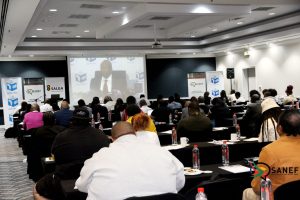
“The Electoral Commission acknowledges and appreciates the vital role played by the media in electoral democracy and in the dissemination of credible information,” Mamabolo said. “The free flow of credible information about political parties, candidates, voting station operations and electoral regulations is a prerequisite for free and fair elections.”
He said the IEC has therefore partnered with SANEF and other stakeholders to embark on a nationwide training programme aimed at equipping journalists with the knowledge and tools needed to report responsibly and accurately on election-related matters.
The programme is being implemented in collaboration with the South African Local Government Association, the Media Development and Diversity Agency, Africa Check and Moxii Africa. The partners will work together to train journalists from community, regional and national media organisations on the legislative framework governing elections, electoral processes and the broader regulatory environment.
The training initiative began in Durban, KwaZulu-Natal, on Tuesday (March 10) and will expand to other provinces over the coming months as part of a nationwide effort to prepare the media for the complex task of covering the elections.
The programme is designed to strengthen the quality of reporting during the election period by helping journalists better understand electoral procedures, the functioning of voting stations, the nomination of candidates and the rules governing political campaigning.
The training will also help journalists navigate the increasingly complex digital information environment, including the growing threat of misinformation and disinformation that can undermine public trust in elections.
The media briefing formed part of the IEC’s ongoing engagement with journalists as preparations gather momentum toward the country’s next municipal polls.
Mamabolo said the Commission is working on the planning assumption that it must be ready to administer elections whenever they are lawfully called. While the election date has not yet been proclaimed, preparations have already reached several important milestones.
Among these is the announcement of a nationwide voter registration weekend scheduled for 20–21 June 2026, which aims to maximise opportunities for eligible citizens to register or update their details closer to where they reside.
“The intended outcome of the registration weekend is to facilitate access to the franchise and broaden electoral participation,” Mamabolo said.
Once the election date is proclaimed by the Minister of Cooperative Governance and Traditional Affairs, voters will have until midnight on that day to register to vote. The proclamation will also formally trigger the election timetable, including the certification and publication of the voters’ roll, the inspection and objection period, and the submission of candidate nominations.
Mamabolo stressed that early announcement of the election date is important because voters must register where they will be on voting day. In local government elections, citizens can only vote at the voting station where they are registered because councillors represent specific wards tied to a voter’s place of residence.
Another major preparatory process nearing completion is the ward delimitation exercise conducted by the Municipal Demarcation Board.
Mamabolo said that by December 2025 the board had finalised and handed over 4,305 wards, representing about 95% of all wards nationally. The remaining wards to be finalised are located in four municipalities in KwaZulu-Natal — eThekwini, Mkhambathini, Inkosi Langalibalele and Alfred Duma — where court proceedings had delayed the process.
Changes in ward boundaries have also required adjustments to voting districts. According to the Commission, 1,865 voting districts — about 8% of the national total — have been subdivided to align with the new ward boundaries and ensure balanced voter populations.
KwaZulu-Natal and Gauteng account for roughly 45% of the affected districts, followed by Mpumalanga and North West.
At the same time, voter registration activity is showing encouraging signs. Between November 2025 and March 2026, the Commission recorded 260,205 new voter registrations, with almost half of them completed through the IEC’s online self-registration portal.
Mamabolo said the steady increase reflects the impact of the Commission’s nationwide online registration campaign and its broader efforts to encourage citizens to register early and verify their details on the voters’ roll.
The Commission has also intensified its voter education programmes across the country. A total of 530 Municipal Outreach Coordinators have been deployed to strengthen civic and democracy education at grassroots level.
Since the start of the current financial year, IEC outreach initiatives have reached more than 3.43 million people through community engagements across all nine provinces.
Mamabolo said these programmes are particularly focused on encouraging first-time voters and young people to participate actively in the democratic process.
The Commission has also scaled up its contact centre to respond to voter enquiries and provide information on registration processes and electoral procedures. Since January 2026, the centre has handled about 27,000 interactions across voice calls, email, live chats and social media platforms.
Meanwhile, recruitment and training of registration staff is underway ahead of the June registration weekend. The Commission has implemented strict selection criteria designed to ensure that electoral officials are independent, non-partisan and capable of operating in demanding environments.
Despite the logistical complexities involved in organising a nationwide election, Mamabolo said the Commission remains confident in its preparations.
He pointed to the successful conduct of 25 by-elections between November 2025 and February 2026 as evidence of the IEC’s continued operational readiness.
As the country moves closer to the next municipal elections, Mamabolo urged South Africans to take the first step in participating in the democratic process by registering to vote and ensuring their details on the voters’ roll are accurate and up to date.