SANEF Council Reflects on G20, Media20, and Media Integrity
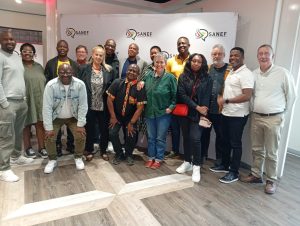
The South African National Editors’ Forum (SANEF) is pleased to announce the successful conclusion of its Council meeting held on 20 September 2025 in Johannesburg. The meeting brought together editors and senior journalists from across the country to deliberate on key issues affecting journalism in South Africa and the wider global media community.
A major focus of discussions was the forthcoming G20 Heads of State Summit, which South Africa will host in Johannesburg on 22–23 November 2025 under the theme “Solidarity, Equality, Sustainability.” The Council engaged extensively on how the Summit and its outcomes will impact the media on the continent and globally, noting the urgent need for journalists to take the initiative in shaping debates on transparency, accountability, and information integrity.
The Council also reviewed the phenomenally successful Media20 (M20) Summit, co-hosted by SANEF and Media Monitoring Africa (MMA), the first of its kind in G20 history. SANEF expressed deep pride in convening such a landmark event of international significance, and extended appreciation to Alt Advisory for its secretariat role, South Africa’s B20 circle, and numerous sponsors and partners from around the world whose support made the M20 possible.
SANEF called on editors, particularly its members, to:
- Publish content on the M20 Johannesburg Declaration and its policy briefs.
- Bring these issues to the attention of newsrooms and audiences.
- Endorse and circulate the Declaration widely.
- Critically assess how forthcoming statements from the G20 Digital Ministers (end of September) and G20 Leaders (November) respond to the concerns raised by the M20.
To maintain momentum, SANEF will publish the M20 Summit Report, including the Johannesburg Declaration and policy briefs to be released on 28 September 2025, aligning with World News Day and the UN International Day for Universal Access to Information.
On the same day, SANEF will launch a national campaign urging the Presidency to align with its G20 Summit leadership expectations, aiming to improve access to information by openly engaging with the media and addressing key questions on the country’s political, social, and economic direction.
SANEF also confirmed that it will actively promote the Declaration and its issues at several upcoming forums, including the G20/AU AI Conference and FIFAfrica later this month, October Media Freedom Week, and the African Investigative Journalism Conference in November. A formal handover of the Declaration to the South African government is being planned, alongside follow-up engagements with Communications Minister Solly Malatsi, B20 chair Cas Coovadia, the G20 Task Force on Artificial Intelligence, Data Governance and Innovation, and the Digital Economy Working Group.
At an international advisory group meeting following the M20 Summit, the following framework was adopted:
- Vision: To foster a world where media freedom and trustworthy information are sustained, protected, and promoted through collaborative national, regional, and global policy engagements—particularly by leveraging Global South expertise and coalitions.
- Mission: To build and sustain a collaborative network of media and information organisations that delivers structured and coordinated action, ensuring the M20 evolves as a dynamic platform aligned with—or critically reflecting on—G20 priorities.
SANEF affirmed its commitment to advancing these objectives and influencing G20 policy through targeted international collaboration.
The Council also deliberated on developments at the Madlanga Commission of Inquiry, noting recent remarks by KwaZulu-Natal Police Commissioner Nhlanhla Mkhwanazi suggesting possible journalists’ involvement in factional battles within the South African Police Service (SAPS). SANEF reiterated its unequivocal condemnation of unethical practices, including cheque-book journalism, which compromise the credibility of the profession. At the same time, SANEF urged all stakeholders, including political leaders, to provide credible evidence before making allegations, so that media houses can act decisively and fairly. Unsubstantiated accusations against journalists are equally damaging and will not be tolerated.
SANEF reaffirms its commitment to ethical journalism, accountability, and press freedom, and will continue to play a leading role in shaping both the national and international media landscape.
Note to Editors:
The South African National Editors’ Forum (SANEF) is a non-profit organisation whose members are editors, senior journalists, and journalism trainers from all areas of South African media. We are committed to championing South Africa’s hard-won freedom of expression and promoting quality, ethics, and diversity in the South African media. We promote excellence in journalism by fighting for media freedom, writing policy submissions, conducting research, and providing education and training programmes. SANEF is not a union.
For more information, please contact:
Makhudu Sefara – Chairperson (079) 177-2134
Tshamano Makhadi – Deputy Chairperson (082) 223-0621
Glenda Daniels – Secretary-General (083) 229-9708
Sbu Ngalwa – Treasurer-General (073) 404-1415
Sli Khanyile – Media Freedom Chair (083) 471-0367
Katy Katopodis – Wellness and Safety Chair (082) 805-7022
Dianne Hawker – Gauteng Convenor (072) 016-5984
Judy Sandison – KZN Convenor (082) 571-3334
Rochelle De Kock – Eastern Cape Convenor (072) 969-8028
Sisanda Nkoala – Western Cape Convenor (073) 138 5564
Reggy Moalusi – Executive Director (071) 682-3695
Twitter: @SAEditorsForum
Email: [email protected]
Website: www.SANEF.org.za