The South African National Editors Forum (SANEF), the Southern African Editors’ Forum (SAEF) and the African Editors Forum (TAEF) welcome the release on bail of Zimbabwean journalist, Hopewell Chin’ono. We note that Justice Chitapi found that Magistrate Gofa grossly misdirected herself in denying the journalist bail. He is expected to be released from Chikurubi Maximum Security Prison later this evening.
SANEF, SAEF AND TAEF call on Zimbabwean authorities to stop hounding Chin’ono, an investigative journalist and documentary filmmaker. Instead we call for his unconditional release.
Chin’ono was arrested and then again re-arrested on 3 November and is facing charges of defeating or obstructing the course of justice. The authorities have alleged that Chin’ono created communication lines with sources within the National Prosecuting Authority (NPA) who gave him access to confidential prosecutorial deliberations, which he allegedly published on social media, including Twitter, on 25 October.
The confidential information purported to show that Henrietta Rushwaya, a Zimbabwean woman allegedly caught at the Robert Mugabe International Airport trying to smuggle gold out of the country, was going to be granted bail without any opposition by NPA officials.
Prosecutors claimed that Chin’ono had jeopardised the integrity of cases against himself and that of Rushwaya.
Chin’ono has declined to reveal his sources – which is a basic principle of journalistic ethics.
Chin’ono is also facing charges of “inciting the public” after he was arrested in July for allegedly calling for anti-corruption protests. At the time, he had been involved exposing government corruption.
SANEF joins international media organisations and defenders of media freedom including the Committee to Protect Journalists (CPJ), Amnesty International, the Africa Editors Forum (TAEF) and the Southern African Editors Forum (SAEF) in condemning the pretrial detention over a tweet, which represents what some see as the latest effort to control social media in Zimbabwe.
SANEF, SAEF and TAEF join media organisations in appealing, once again, to Cyril Ramaphosa in his position as African Union chair, to use all available mechanisms to help secure Chin’ono’s release, and to ensure that journalists across the continent are respected as essential workers throughout the Covid-19 pandemic, and are not jailed for their work.
Chin’ono’s detention was the latest tactic to target and harass critical voices through the misuse of the criminal justice system.
Addressing the International Press Institute Congress in Cape Town in February 1994, Nelson Mandela said: A critical, independent and investigative press is the lifeblood of any democracy. The press must be free from state interference. It must have the economic strength to stand up to the blandishments of government officials. It must have sufficient independence from vested interests to be bold and inquiring without fear or favour. It must enjoy the protection of the constitution so that it can protect our rights as citizens.”
We hope that the Zimbabwe authorities will heed his counsel.
Note to Editors: The South African National Editors’ Forum (SANEF) is a non-profit organisation whose members are editors, senior journalists and journalism trainers from all areas of the South African media. We are committed to championing South Africa’s hard-won freedom of expression and promoting quality, ethics and diversity in the South African media. We promote excellence in journalism through fighting for media freedom, writing policy submissions, research and education and training programmes. SANEF is not a union.
The South African National Editors’ Forum (SANEF) held cordial meetings on Thursday (19 November 2020) and Friday (20 November 2020) with SABC editors and executives respectively to find a way forward in the current impasse facing the public broadcaster.
SANEF notes that the SABC board announced late on Thursday night that it was suspending the restructuring process by seven days to allow for further consultation.
News reports have indicated that media unions are going ahead with strike action that threatens a blackout of broadcast and digital services at the public broadcaster.
SANEF has proposed a mediated process to both management and editors to try and resolve the impasse, as the instability in the news division at the public broadcaster threatens its ability to deliver on its expansive, but sadly unfunded public mandate.
The SABC delivers news in all 11 official languages across the country and two San languages, Khwedam and !Xuntali, and it is the only institution with regional offices, ensuring that rural and marginalised communities are given a voice. In parts of our country, it remains the only source of information for communities. It, therefore, remains central to South Africa’s ability to ensure thriving participatory democracy.
It was clear to SANEF that none of the parties dispute the critical need for the SABC to restructure and cut costs. A bloated, top-heavy structure is the unfortunate consequence of years of mismanagement, including the payment of above-inflation and irregular increases and bonuses. All parties agree that for the SABC to be saved, costs must be cut.
In our meeting with editors on Thursday, they indicated that they remain committed to the restructuring of the SABC to ensure its sustainability and ability to continue to deliver on its constitutional mandate.
But they expressed frustration that there was not sufficient consultation on the proposed structure and indicated that there were gaps in the structure presented that could impede operations directly linked to delivering on its public service responsibilities.
The SABC executive, led by Group CEO Madoda Mxakwe, explained that Treasury conditions on the bail-out it received included reducing its salary bill, which currently represents more than half its revenue and 43% of its expenditure. In the news division alone, 93% of the budget is spent on salaries.
Management also warned that should the turnaround strategy not be implemented, the SABC will run out of money by April. SANEF is of the view that urgent action must be taken to avoid this situation, that will be to the detriment of millions of South Africans.
The SABC executive reiterated its commitment to continue to deliver on the SABC’s constitutional mandate despite the lack of funding from the shareholder.
SANEF believes a mediated process between the newsroom and the management team will allow for the management team to share with the editorial staff the vision for the SABC and explain the difficult choices it had to make as part of safeguarding the sustainability of the SABC.
The editorial team will be able to share with management its proposals on ensuring that while the inevitable restructuring process is carried out, there are no gaps that threaten operations.
FUNDING THE PUBLIC MANDATE
SANEF is however concerned that the SABC’s critical public mandate has never been funded sufficiently by the government despite promises over the years to do so.
Instead, there has been a reversal of support to the SABC.
For example, the SABC was not given extra funding to cover the 2019 national and provincial elections. The public broadcaster played a critical role in giving voice to ordinary South Africans and gave the opportunity for political parties to share their manifestos with the public.
The SABC plays a critical role in informing and educating the public on pandemics like Covid-19, especially in a climate where audiences turn to credible media outlets for factual news.
In the week after the National State of Disaster was declared, the average audience for IsiZulu language TV news on SABC increased by 40% and IsiXhosa news audience rose by 60%.
The pandemic has had a disastrous impact on the finances of all media companies, including the SABC, again highlighting the need for proper government funding of the public broadcaster.
Government and political parties cannot speak about the importance of the SABC but fail to provide it with the necessary financial support to execute that mandate.
Note to Editors: The South African National Editors’ Forum (SANEF) is a non-profit organisation whose members are editors, senior journalists and journalism trainers from all areas of the South African media. We are committed to championing South Africa’s hard-won freedom of expression and promoting quality, ethics and diversity in the South African media. We promote excellence in journalism through fighting for media freedom, writing policy submissions, research and education and training programmes. SANEF is not a union.
The South African National Editors’ Forum (SANEF) is concerned about the instability at the SABC after the announcement of impending retrenchments.
As part of its turnaround strategy, the SABC announced this week it would retrench 400 of its almost 3,000 employees. Newsroom staff are also affected. Apart from the lay-offs, the SABC also stated that it would freeze salary increases for the next three years.
Earlier in the year it forecast that it might have to lay off 600 jobs for its own survival. The SABC’s salary bill represents more than half its revenue and 45% of its expenditure.
SANEF calls on the SABC leadership to continue to fulfil its public mandate by ensuring that its budget cuts do not curtail a number of critical services including its African language and regional programming. We call for the SABC to ringfence core news and current affairs posts and not compromise its core public mandate of news delivery.
SANEF will be seeking a meeting with the SABC to get a deeper understanding of its restructuring plans and its vision for the future of the public broadcaster. We note that Section 189 notices to the newsroom staff have temporarily been withdrawn.
Since President Cyril Ramaphosa declared the Coronavirus pandemic a national disaster on 23 March 2020, more than 700 jobs have been lost in the media industry. In the first two months of the lockdown we saw the closure of two magazine publishers and 80 small print publications operating across the country.
SANEF notes with deep concern that in many newsrooms around the country, journalists are simply not replaced, resulting in a diminished capacity to cover the length and breadth of the country. With the prevailing tough economic conditions, advertising revenue has declined dramatically, and the bulk of digital advertising revenue leaves the country’s shores to Facebook and Google.
It is not just the COVID-19 crisis that has decimated the media sector. In the past three years, scores of journalists lost their jobs due to retrenchments by the then Tiso Blackstar, Media24, Independent Media and the shutdown of Afro Worldview, previously known as ANN7, by MultiChoice. Titles like The Times and HuffPost SA were closed, which diminished the diversity of voices in South Africa.
We call on media owners to think creatively and responsibly about implementing new, sustainable business models, built on the integrity and the trust that our readers, viewers and listeners place in us to tell the country’s stories without fear or favour.
Note to Editors: The South African National Editors’ Forum (SANEF) is a non-profit organisation whose members are editors, senior journalists and journalism trainers from all areas of the South African media. We are committed to championing South Africa’s hard-won freedom of expression and promoting quality, ethics and diversity in the South African media. We promote excellence in journalism through fighting for media freedom, writing policy submissions, research and education and training programmes. SANEF is not a union.
Johannesburg – When one of my favourite broadcasters, the late Jim Lehrer – of America’s Public Broadcasting Station, was asked if he had day-to-day guidelines for practising journalism, he said: “Well, yes, and here they are: “Do nothing I cannot defend;
“Cover, write and present every story with the care I would want if the story were about me;
“Assume there is at least one other side or version to every story;
“Assume the viewer is as smart and caring and as good a person as I am. Assume the same about all people on whom I report;
“Assume personal lives are a private matter until a legitimate turn in the story absolutely mandates otherwise;
“Carefully separate opinion and analysis from straight news stories and clearly label everything;
“Do not use anonymous sources or blind quotes except on rare and monumental occasions and
“No one should ever be allowed to attack another anonymously. And, finally, I am not in the entertainment business.”
Essential elements of journalism
Every time I read this, I remember my first journalism lecture at Rhodes University in Makhanda, when we debated the essential elements of reporting:
Accuracy
Truthfulness
Objectivity
Impartiality
Fairness
Accountability
It is sad to see that in this day and age, some journalists ignore ethical standards as espoused by Lehrer – may his soul rest in peace – and the professional standards we learn from journalism schools which are emphasised by concerned editors.
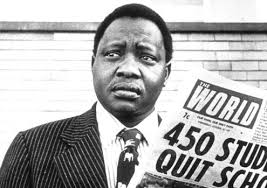
Forty-three years since one of the implementers of apartheid white minority rule, Jimmy Kruger, arrested editors and banned The World and Weekend World, and 26 years into a democratic South Africa, is the state of media freedom in our Rainbow something to be proud of?
No.
While there are no threats to the freedom of the media as there were 43 years ago, the state of the media industry is as messy and more confusing due to the ever-changing business models, diminishing capacity of news organisations, declining profits, fake news, misinformation, the over-reliance on unnamed sources and declining public trust.
Ignoring ethical guidelines
It is a pity that these days, some news sounds or reads more like a biased commentary which has more opinion than facts.
Some journalists ignore ethical guidelines for the sake of sensationalising the news in the quest to be seen as hard-hitting newsmen and women.
Of course, journalism has seen a sudden shift because of the advent of blogs and social media platforms like YouTube, Facebook and Instagram, as well as the overwhelming urge to promote one ideology over another.
Despite the shift to digital media and more competition for advertising and print newspaper sales and circulation, ethical decision-making and journalistic integrity, should remain steadfast.
Unfortunately, we continue to see the media spin narratives to serve their own interest by using cherry-picking stories, using compromising pictures, taking content out of context, or promoting misleading headlines and relying – sometimes over-relying on anonymous sources.
Use of anonymous sources
In addition to sensationalising news for commercial and political gain, journalism ethics is suffering from the growing use of anonymous sources. Amid journalism scandals and hand-wringing about media credibility, the use of anonymous sources has run amok.
When I was trained as a reporter, editors insisted that we always strive to get both sides of every story. We were never allowed to publish unconfirmed rumours or to quote unnamed sources.
Now, all the rules have changed. The 24-hour news cycle, growth of online news, competition for audiences, viewers and listeners, means unnamed sources are used increasingly to break stories leaked by officials seeking to get their views before the public.
Rumours by anonymous sources are tossed into the air or headlined in print, to be proved or disproved later.
Of course, there is an argument that anonymous sources are an essential tool of investigative reporting. Used well, anonymous sources are an indispensable tool for supplying depth and critical insight to complicated stories.
For intrepid journalists, one needs to answer two facts about the source:
* Does the source actually have all the facts and knows what he or she is talking about, and or,
* Does the source have a hidden political or economic agenda and/or an axe to grind?
Scepticism of unnamed sources
I can think of no common journalistic shortcoming more threatening to media credibility than over-reliance on unnamed sources.
I am not surprised that members of the public are often sceptical of unnamed sources. Almost invariably people assume that any quote without a name attached to it was made up by the reporter.
Indeed, while readers are sceptical of anonymous sources, sometimes they are necessary. In deciding to use them, the value of the information they divulge must be weighed against the credibility questions that anonymity raises.
Of course as human beings, journalists may fall short of reader expectations. That doesn’t make the mistakes or thumb-sucking stories alright.
Everyone knows that sometimes the information may be sensitive but important enough to make anonymity acceptable.
To offset any public doubt, instead of just identifying someone as an “unnamed source,” or a “source who declined to be named,” the editors need to explain the sources’ motives for coming forward and what qualifies them as being credible. For instance, the journalist and his or her bosses may note what position the source holds in an organisation or company.
Also, for an unnamed source to carry weight, the information must be so important, the media house may not be able to get it anywhere else. Also if known, the source would face harm or serious loss.
No wonder news organisations and individual reporters value unidentified sources so much that they go to great lengths to protect their identities.
Guidelines for using anonymous sources
One may say surely there is a big divide between whistle-blowers and run-of-the-mill anonymous sources who freely bash political and/or business opponents.
That is why the world-famous newspapers, The New York Times and Washington Post have outlined guidelines for helping journalists decide whether to use anonymous sources. These guidelines are:
* Promises of anonymity must be authorised by the editor;
* Anonymous sources should be used only for a just cause;
* Anonymous sources should be used only as a last resort;
* Sources should be as fully identified as possible, with reasons for anonymity explained in the story;
* Proportionality: editors should balance the potential harms and benefits in any use of anonymous sources;
* Anonymous sources can only be used with just intentions by the reporter, the media and the source; and
* Use of anonymous sources requires independent verification by a second source.
* Unnamed sources or not, a true journalist must be able to display professional ethical standards unswayed by inherent human frailties such as political or business allegiance which may make one vulnerable to ethical lapses.
Rigorous self-criticism
Therefore, the media fraternity should strive for a rigorous self-criticism over any perception of irresponsibly forsaking professional morality.
In their book, Doing Ethics in Journalism, authors Jay Black, Bob Steele and Ralph Barney pose three ethical standards for journalism:
* Seek truth and report it as fully as possible. Be thorough, accurate, and fair).
* Act independently. Avoid outside influences that would compromise the credibility of the reporting.
* Minimise harm. Reporting does not occur in isolation. The effects of reporting can cause harm, often unintended.
Is anyone listening?
There is no doubt that the duty of the media is to shape the mind and the opinion of the public.
Maybe it is time that the public demand professional and higher standards from the media industry by boycotting media companies that have journalists who do not adhere to the expected ethical standards.
* Rich Mkhondo runs The Media and Writers Firm (www.mediaandwritersfirm.com) a content development and reputation management hub.
The National Press Club, in partnership with Unisa and the Qoboza Family, hosted the 10th Annual Percy Qoboza Memorial Lecture on Monday, October 19th.
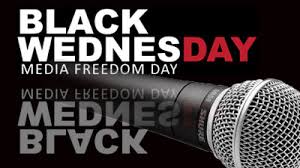
The lecture is held annually in remembrance of 19 October 1977, when the apartheid government banned the World, Weekend World and other publications and organisations in what came to be known as Black Wednesday.
The lecture honours Percy Qoboza, the editor of The World and a critic of the apartheid regime and is a reflection on media freedom.
The theme this year was: “Why journalism matters. The challenges have changed but has its core purpose?”
The lecture was presented by Pippa Green, SA Press Ombudsman. Read the lecture here
The South African National Editors’ Forum (SANEF) joins media houses and advocacy groups around the country in commemorating Black Wednesday – the day in October 1977 when then Minister of Justice, Jimmy Kruger ordered the arrest of editors and the banning of 19 Black Consciousness organisations and several anti-apartheid newspapers such as the World and the Weekend World.
Several events were held today and more will be held later in the month. They included the 10th Annual Percy Qoboza Memorial Lecture (Qoboza was the editor at the time of The World newspaper); a webinar discussion on fake News and disinformation by the Media Development and Diversity Agency (MDDA) as well as the Aggrey Klaaste Trust’s first annual colloquium on “Surviving 2020 and Media Credibility Going Forward”.
SANEF notes that although South Africa is in a far better position in terms of media freedom compared to those dark apartheid days, the media industry still faces serious challenges including journalists being harassed by police and communities when covering protests.
On Friday, for instance, SABC news journalist Reginald Witbooi was threatened by ANC members in Senekal during a LIVE crossing. A number of other journalists were also harassed by EFF supporters including Graeme Raubenheimer, also from the SABC and News 24’s Pieter Du Toit. Since the Senekal Case started, Citizen journalist, Marizka Coetzer and photographer, Tracy-Lee Stark were assaulted and their equipment damaged when a crowd of approximately 1 000 farmers protested outside the court against the murder of 22 year old Brendan Horner on Tuesday afternoon.
SANEF Chairperson, Sbusiso Ngalwa says a lot more work still needs to be done to educate all sectors of society about the crucial role the media plays in strengthening democracy. Ngalwa also points to the serious financial problems faced by the sector.
Says Ngalwa, “With COVID-19, we have seen publications close down, we have seen companies announcing mass retrenchments, and we have seen no less than 700 journalists losing their jobs during this period.”
“So, the reduction in the number of journalists and media houses has a direct influence and direct threat to efforts to spread the news and ensure a free flow of information.”
The impact of COVID-19 on the media sector led to SANEF establishing a Media Relief Fund, which was launched in July to assist journalists financially. We are happy to report that due to the goodwill of individuals and donors and the generosity of corporate South Africa, the Fund is a few thousand rand short of R5 million – SANEF has so far raised R4 870 067. The initial seed funding of R500 000 was contributed by MTN SA. Standard Bank and the Open Society Foundation for South Africa (OSF-SA) are the latest two organisations to contribute a million rand.
SANEF used the first phase to offer emergency relief to pay out a total of R1 135 000.00 to 227 beneficiaries. The second phase closed on 30 September and is currently under adjudication. SANEF will launch the third phase shortly.
With further funding, SANEF is hoping to support other projects to assist the sustainability of small, independent media institutions across the country, through a variety of targeted interventions.
Note to Editors: The South African National Editors’ Forum (SANEF) is a non-profit organisation whose members are editors, senior journalists and journalism trainers from all areas of the South African media. We are committed to championing South Africa’s hard-won freedom of expression and promoting quality, ethics and diversity in the South African media. We promote excellence in journalism through fighting for media freedom, writing policy submissions, research and education and training programmes. SANEF is not a union.
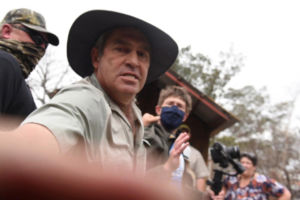
An unidentified farmer tries to stop photojournalist Tracy Lee Stark from taking photographs during a violent protest by farmers in Senekal, South Africa, on October 6, 2020. (Photo: The Citizen/Tracy Lee Stark)
South African authorities must conduct a swift and transparent investigation into recent attacks on journalists covering protests held by farmers, and hold those responsible to account, the Committee to Protect Journalists said today.
On October 6, in the Free State province town of Senekal, a protesting farmer harassed and assaulted Tracy Lee Stark, a photographer at The Citizen newspaper, while another attacked Marizka Coetzer, a reporter at the outlet, according to the journalists, who spoke to CPJ in phone interviews, and a report by their employer.
The demonstrators, who were protesting the murder of farmers in South Africa, gathered at a local court at the hearing of two people accused of torturing and murdering a local farmer, shouted insults at the journalists, and tried to prevent them from taking photos. One man punched Stark as he tried to grab her camera and another destroyed Coetzer’s smartphone, the journalists said.
“Journalists must be able to cover protests in South Africa without fear that they will be harassed, attacked, and see their equipment destroyed,” said Angela Quintal, CPJ’s Africa program coordinator. “Authorities must thoroughly investigate the recent attacks on The Citizen journalists Tracy Lee Stark and Marizka Coetzer and send a strong message that, just as there should be no impunity when it comes to attacks on farmers, there should be no impunity when it comes to crimes against journalists in the country.”
Stark told CPJ that the protest started peacefully but the tone changed after rousing speeches, including by Ernst Roets, the deputy CEO of the Afrikaner interest group AfriForum. Police arrested one farmer, Andre Pienaar, who is expected to be charged with public violence and malicious damage to property, according to newsreports.
Stark told CPJ that several protestors warned her not to photograph the gathering, but said she continued to do her job. One farmer called her a “liberal bitch” and shouted other insults, and then punched her in the shoulder and tried to grab her camera, she said.
“I held [the camera] tight and he threatened to smash it,” Stark said, adding that another protester intervened and escorted her to safety. She told CPJ that she was shaken but planned to continue covering such protests, saying, “I am a woman photographer. I have a point to prove.”
Coetzer told CPJ that she was reporting from a different area outside the courthouse, and was taking photos with her cellphone when another farmer confronted her and told her to stop filming.
Coetzer said she walked away and began filming in another area, when the same man followed her. She put her phone in her jacket, but the man grabbed it from her pocket, snapped it in two, flung it away, and told her to “fuck off.” Coetzer said she was unable to recover the memory card in her phone, which she had newly purchased, or any images she had taken.
In a statement, the South African National Editors’ Forum, a voluntary organization of editors and senior journalists, condemned the assaults, adding that “It is only through the decisive and firm actions of state organs that criminals and members of society will stop attacking journalists.”
Roets told CPJ via messaging app that AfriForum was “very alarmed” by what happened to the journalists, and said he tried to speak to Coetzer after he heard about the attack. Roets said that the violence was perpetrated by a small number of protesters after many of the farmers had dispersed, and said as far as he knew the demonstrators who attacked Stark and Coetzer were not AfriForum members.
Free State police spokesperson Brigadier Motantsi Makhele told CPJ via messaging app that the journalists had been advised to make a statement to police, and added that police planned to investigate the attacks and bring those responsible to justice.
Coetzer told CPJ she gave a statement to Silverton police today.
The attacks occurred on the same day the United Nations Human Rights Council adopted a newresolution on journalism safety which stated that the organization was deeply alarmed at the specific risks faced by women journalists.
The South African National Editors’ Forum (SANEF) is deeply concerned by the attack on writer and columnist, Ismail Lagardien who was seriously injured covering the Kleinmond abalone protests on Monday 5th October 2020.
SANEF believes that every citizen should be seriously troubled by such reports as journalists go out in the field to tell community stories, both fairly and accurately. When a frustrated community turns its anger on journalists, it has severe consequences for our democracy. The media must reflect all sides in conflict situations – and the public must respect the essential role of the press.
Lagardien was seriously injured on Monday evening after protests erupted in the Overberg town of Kleinmond following the arrest of five alleged perlemoen poachers. Lagardien is now in hospital awaiting surgery for a broken jaw sustained when a brick flew in through the passenger window.
Relaying events via text message on Tuesday morning (he was unable to speak audibly due to his injury), he wrote: “I saw a roadblock and tyres being laid out, so I drove through, towards the informal settlements to find out more.”
At the time he had his equipment and camera out. “That’s when the rock came through the passenger window,” he said. Speaking from his hospital bed on Monday night, Mr Lagardien told Daily Maverick his jaw was fractured, and he had several teeth missing.
While at this stage it cannot be ascertained for sure if Lagardien was in fact targeted randomly as a motorist or specifically because he is a member of the media, this would not be the first time that journalists appear to have become the scapegoat of misdirected anger from some members of the public. These incidents include:
In February KayaFM journalist Gavin Emmanuel was assaulted and injured while covering a service delivery protest in Ga-Rankuwa, north of Pretoria. The township had come to a standstill after main roads were blockaded with rubble and burning tyres.
In Embalenhle, Secunda, in February, freelance journalist Desmond Latham, as well as a female staff member from Frayintermedia and female UNICEF employee were assaulted allegedly by members of a local taxi association.
Criminals robbed an eNCA reporter, Xoli Mngambi and a crew on assignment in Mamelodi East of their equipment in February.
Three journalists were held up at gunpoint and robbed of their belongings while covering a World Aids Day event in Khayelitsha last December.
In April, a SABC Durban news crew while out in the field reporting on the impact of the lockdown on rural communities in Ulundi, KwaZulu Natal, were blocked and threatened by a group, not related to their news story. Community members threatened to burn the SABC news vehicle.
One person has been arrested for public violence in Kleinmond, near the town of Hermanus, following the protests that erupted on Monday.
SANEF believes that attacks on media professionals are often perpetrated by organised opportunistic criminals, crime groups, militia and security personnel, making local journalists among the most vulnerable.
We call on every citizen to protect the right to freedom of opinion and expression for all. Promoting the safety of journalists and combatting impunity for those who attack them are central elements of democracy.
We call on law-enforcement agencies to thoroughly investigate these incidents and to bring perpetrators to book. It is only through the decisive and firm actions of state organs that criminals and members of society will stop attacking journalists.
SANEF is hoping that all traumatised journalists will receive counselling assistance from their employers. We wish Mr Lagardien a speedy recovery.
Note to Editors: The South African National Editors’ Forum (SANEF) is a non-profit organisation whose members are editors, senior journalists and journalism trainers from all areas of the South African media. We are committed to championing South Africa’s hard-won freedom of expression and promoting quality, ethics and diversity in the South African media. We promote excellence in journalism through fighting for media freedom, writing policy submissions, research and education and training programmes. SANEF is not a union.
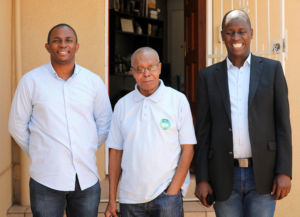
Stalwart Joe Thloloe (middle) with Sowetan journalist Penwell Dlamini and photographer Antonio Muchave
30 September 2020
On 24 September 2020 Sowetan published this article written by Penwell Dlamini which is an interview of stalwart Joe Thloloe and Chairman of Aggrey Klaaste Trust [AKT].
SA needs to protect press freedom now more than ever as there are still stubborn resemblances of what the country used to be in the past despite gains made in the democratic era.
This is the view of legendary journalist Dr Joe Thloloe which he shared with Sowetan as he reflected on the current state of the media and its role in nation-building.
Thloloe, who used his pen and notebook to fight the apartheid government, said real liberty is about the freedom of the press.
“Free media is the foundation of democracy. Democracy means that people have their say and they are not scared of saying what they believe and what they want… It is in that exchange of ideas that society flourishes. We need it today more than we’ve ever needed before,” Thloloe said.
He said the role of journalists is critical 26 years into democracy as some of the evils there during the apartheid era can still be seen in a free SA.
“When we got to 1994, we got into a very euphoric state where we thought, at last, we have achieved what we wanted to achieve. But when you look around in society, it is a very sad story. We have regressed rather than progressed.
Therefore, the things that we fought for, we still need to fight for even today.
“People are going to bed starving. Coronavirus has just made it a little worse … That fight for a true democracy continues.”
Thloloe is one of the high-profile speakers who will take part in a colloquium scheduled for October 19 which will discuss the state of the media in SA. The colloquium has been organised by Sowetan in partnership with the Aggrey Klaaste Trust and is supported by Arena Holdings, Wits University, and the SA National Editors Forum. The late Klaaste was the editor of Sowetan who championed the values of nation-building in the newspaper and society at large.
Thloloe said when Klaaste introduced the concept of nation-building some in the newsroom laughed at him as they felt what was needed was the demolition of an apartheid system before anything was built.
“Aggrey Klaaste had the foresight to see that we are going to need to build a nation and he made it the responsibility of each individual. [He taught that] each individual is responsible for building the nation,” he said.
Thloloe, who was arrested four times as a journalist by the apartheid government, said most of the problems faced by society today are a result of the lack of ethos of national building.
“Today ’s morality is ‘I come first. My pocket is the most important pocket’. We’ve forgotten the old saying which is umuntu ngumuntu ngabantu [a person survives because of other people]
“We’ve forgotten the old saying that you should do to others as you would have them do to you. We are now a very materialistic society and that is our tragedy,” he said.
This website uses cookies to improve your experience while you navigate through the website. Out of these cookies, the cookies that are categorised as necessary are stored on your browser as they are essential for the basic functionalities of the website. We also use third-party cookies that help us analyse and understand how you use this website. These cookies will be stored in your browser only with your consent. You also have the option to opt-out of these cookies. Opting out of some of these cookies may have an effect on your browsing experience.
Necessary
Always active
Necessary cookies are essential for the website to function properly. This category only includes cookies that ensures basic functionalities and security features of the website. These cookies do not store any personal information.
Preferences
The technical storage or access is necessary for the legitimate purpose of storing preferences that are not requested by the subscriber or user.
Analytics
Analytics cookies are used to track user behaviour on our website. We process these cookies to understand user engagement and improve user experience on our website.The technical storage or access that is used exclusively for anonymous statistical purposes. Without a subpoena, voluntary compliance on the part of your Internet Service Provider, or additional records from a third party, information stored or retrieved for this purpose alone cannot usually be used to identify you.
Marketing
The technical storage or access is required to create user profiles to send advertising, or to track the user on a website or across several websites for similar marketing purposes.