IEC Political Funding Symposium Flags Public Trust Crisis in SA
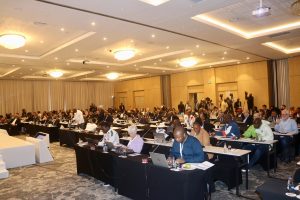
As the Independent Electoral Commission (IEC) of South Africa convened its landmark Political Funding Symposium in Durban to discuss progressive models for financing political activity, a sobering report by the Human Sciences Research Council (HSRC) jolted the conversation into reality: public trust in political parties and politicians is at an all-time low.
According to the nationally representative research, only 17% of South Africans express confidence in political parties, while a mere 14% trust politicians.
You can access the HSRC research report here.
The research, commissioned by the IEC, paints a bleak picture of the nation’s political mood. A staggering 80% of South Africans believe the country is headed in the wrong direction, while 58% express discontent with democracy itself.
Despite this, 66% say they would still vote if elections were held tomorrow, signalling a persistent, if not a strained, commitment to democratic participation.
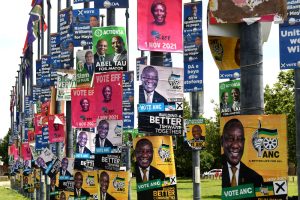
Perhaps most telling is the public’s unwillingness to financially support the very system meant to represent them and protect the country’s democratic elections from foreign interference through anonymous and possibly foreign political funding.
The research finds that only 9% of South Africans have ever donated to a political party, and among those who haven’t, 73% express no interest in ever doing so. Even the state-backed Multi-Party Democracy Fund (MPDF), designed to depoliticise donations and reduce elite capture, has failed to gain traction. Over half of South Africans have never heard of it, and nearly three-quarters are unwilling to contribute, even when offered tax rebates.
The findings suggest a deep alienation from the political class. The reasons for public reluctance are varied: a lack of trust in politicians, ignorance of the regulatory frameworks, scepticism and fears of misuse of funds, and sheer economic hardship. Those more politically engaged or already party members were slightly more inclined to donate, but even this effect was weak, the document finds.
Implemented in 2021 and amended in 2024, the Political Funding Act (PFA) was designed to enhance transparency and fairness in party financing. It mandates the disclosure of large private donations and introduced the MPDF. However, awareness of the Act remains alarmingly low, with 61% of South Africans never having heard of it. Education, wealth, and political engagement were significant predictors of awareness, leaving large segments of the population uninformed.
Even among those aware of the PFA, the document says support is tepid. Just 42% of the public support laws like the PFA, while 29% remain neutral and 16% are unsure. Only a slim majority (55%) support tracking political party expenditures to verify donation claims, an essential step towards detecting fraud or manipulation.
Despite overall distrust, 64% of South Africans still believe the IEC should be responsible for overseeing political funding transparency. Yet confidence in the Commission’s ability to enforce compliance is fragile: only 9% express very high confidence, and 19% say they have no confidence at all. This signals the need not only for better capacity but also for a public-facing strategy to restore trust in the institution’s oversight role.
Recommendations from the HSRC Research
The HSRC report doesn’t stop at diagnosis. It puts forward a series of concrete recommendations, including:
- Enhanced Public Education Campaigns: To raise awareness of the Political Funding Act and the MPDF across all socio-economic groups.
- Increased IEC Capacity: Calls to improve the technical, investigative, and auditing capabilities of the IEC to enforce compliance.
- Hybrid Regulatory Models: Shift from a purely income-based disclosure regime to a hybrid income-and-expenditure model, which could expose discrepancies between reported donations and actual campaign spending.
- Strengthening Gender Equity: Encourage the use of public funds to promote gender-responsive political financing and better support for women candidates.
- Collaboration with Other Institutions: Include entities like the Auditor-General, SARS, and the Hawks in financial monitoring efforts.
The delegates in the symposium described the findings of the HSRC’s report as a wake-up call for political renewal in the country, and not just academic. As South Africa stares down another electoral cycle next year for the local government, the data mirror a citizenry that is politically exhausted, economically constrained, and increasingly disillusioned.
If parties, regulators, and civil society fail to respond to this crisis of trust with urgency, the country risks watching its democratic institutions wither from the inside out.
The IEC’s Political Funding Symposium may have been a forum for policy ideas, but the HSRC report made it clear: without public trust, even the best regulations may be dead on arrival.
ENDS